Showing posts with label Cloud Computing. Show all posts

Friday, 1 September 2023

Accelerate your hybrid cloud journey and keep your business running with reliable failover solutions from IBM Power Virtual Server

IBM Power Virtual Server, IBM, IBM Cloud, IBM Tutorial and Materials, IBM Certification, IBM Guides

According to the World Meteorological Organization, global temperatures are set to reach new records in the next five years. The Copernicus Programme also reports that multiple global heat records were broken in July 2023. Today, climate change is a real threat with disastrous consequences to businesses.

Rising cybercrimes are another significant threat to businesses, causing major financial damages in various forms. The global average cost of a data breach in 2023 was USD 4.45 million, a 15% increase over three years.

Other real-world changes—global health crises, geopolitical upheavals and new technological discoveries—are also impacting businesses, highlighting the need for an IT strategy in which disaster recovery (DR) and DR security aren’t an afterthought.

Go hybrid for disaster recovery (DR)


With a hybrid cloud strategy, you can deploy your workloads across multiple locations—on-premises or in public or private clouds—and not risk losing them all in the event of a disaster or an attack. You can put your hybrid cloud strategy into action with IBM Power Virtual Server, which are virtual IBM Power servers that you can access in the cloud. These servers enable you to replicate your on-prem IBM Power infrastructure environment in the cloud, allowing you to seamlessly move and manage your workloads across both environments.

But how exactly do IBM Power Virtual Server help put DR and DR security front and center? To answer that question, we must consider one of the key use cases of IBM Power Virtual Server—business continuity planning—which helps you keep your business running with reliable failover solutions including backup, high availability and DR. In this post, we’ll focus on how you can kick your business continuity plan into high gear with virtual tape library systems on your IBM Power Virtual Server.

What are virtual tape libraries and how can you use them on IBM Power Virtual Server?


Virtual tape libraries (VTLs) are disk-based appliances that are designed to emulate traditional tape libraries. For users (like many IBM Power clients) who continue to rely on physical tape or virtual tape for storage and backup but are looking to leverage IBM Power Virtual Server for DR and security, VTLs can be a game changer.

VTLs offer numerous benefits for IBM Power Virtual Server environments:

  • They help automate backup and recovery processes to eliminate user disruption.
  • They provide easy-to-scale solutions that start at a terabyte and can scale to petabytes.
  • They deliver optimum performance for backups on-premises and in IBM Power Virtual Server environments.

To get started with VTLs on IBM Power Virtual Server, you don’t have to look any further than FalconStor StorSafe VTL, an integrated VTL solution from IBM partner FalconStor—one of the leading providers of VTL solutions in the market.

StorSafe VTL is the only IBM-certified VTL solution that offers data protection, cloud migration, DR, high availability and ransomware protection. For your workloads already on IBM Power Virtual Server, it can optimize backup through deduplication—significantly improving performance and helping reduce backup storage costs by 60%–90% (based on IBM client data, actual results may vary).

For workloads that you wish to migrate to the cloud from your on-prem Power environment, StorSafe VTL provides reliable and secure data movement from on-premises to cloud and back.

FalconStor StorSafe VTL use cases


Let’s consider the four use cases FalconStor StorSafe VTL has for backing up and protecting your mission-critical workloads:

◉ Migrate from on-premises to IBM Power Virtual Server: Simplify the migration of your on-premises workloads and legacy tapes to IBM Power Virtual Server with a non-disruptive and secure process that can scale according to the size of your workloads.

◉ Set up hybrid cloud backup: Leverage the cloud for long-term archival or disaster recovery with a secondary backup to IBM Power Virtual Server.

◉ Enable IBM Power Virtual Server resident backup: Ensure cost-effective and reliable backups and restores for all your IBM Power Virtual Server workloads.

◉ Enhance IBM Power Virtual Server disaster recovery: Replicate your workloads in IBM Power Virtual Server to another cloud location and enjoy the added protection of a secondary cloud location using your existing StorSafe VTL solution.

Source: ibm.com

Thursday, 15 June 2023

Is there a “right” cloud strategy for banking?

IBM Exam, IBM Exam Prep, IBM Exam Prep, IBM Preparation, IBM Tutorial and Materials, IBM Guides, IBM Learning

As public cloud technology and hybrid multicloud architectures are being adopted in financial institutions at an increasing rate, we’re observing that their counterparts in the public sector— central banks—are a long way behind, due at least in part to a profoundly risk-averse approach.

While central banks have a very different mission from commercial banks, what they do have in common is the need to modernize their IT operations to support digital transformation, contain costs, source key skills and mitigate operational and cybersecurity risks.

New report: Central Banking and Cloud Services: The New Frontier


To get a better understanding of how central banks compare to private sector organizations in how they think about public cloud and approach their cloud migration strategy, we partnered with the team at OMFIF to produce a first-of-its-kind report that looks at the opportunities and challenges of public cloud services seen through the lens of central banking officials.

Central Banking and Cloud Services: The New Frontier is based on a series of interviews with executives to illustrate an informed picture of what cloud technology can offer central banks and the challenges they face in adopting it. In exploring the benefits that cloud migration gives central banks, we also examined the ways in which financial institutions in the private sector have addressed the hurdles that are hampering central bank cloud adoption. Some of these challenges are technical, some are legal, some are cultural, and different solutions are necessary to address each.

What does it mean to “do cloud right?”


In IBM Cloud, we are working to drive new levels of ecosystem collaboration and knowledge-sharing that support cloud adoption by de-risking the journey and reducing the time-to-value. We see public cloud as an enabler of a better future for financial services, not as a destination.

The following five takeaways are insights that we have gleaned from our extensive customer engagements, global regulatory outreach program and the industry contributions of the IBM Financial Services Cloud Council:

1. Allow your digital transformation ambitions (not your fears) to drive your cloud strategy.

2. Know yourself, your stakeholders and your data.

3. Be solution-oriented and nimble in combining technical, operational and legal capabilities to deliver outcomes that matter to your organization.

4. Understand the immediate power and sustained value of great architecture with embedded security controls and continuous monitoring.

5. Maximize the optionality that hybrid multicloud brings to mitigate regulatory and technological uncertainty in your environment.

IBM believes that dependability, reliability and trust need to be at the heart of every cloud strategy. Done right, our take is that the cloud can deliver unparalleled benefits in performance and total cost of ownership without compromising resiliency, security and compliance. And that conviction holds true across both public-sector institutions and private-sector enterprises.

The good news is that for every cloud transformation challenge, there is a solution—this includes privacy-enhancing technologies like confidential computing and Keep-Your-Own-Key (KYOK) cryptography, architectural patterns that enable intentional and optimized choices about workload placement, pre-defined security controls with continuous posture management, and specific deployment measures that address data localization requirements.

We’re confident that by learning from the successes and challenges experienced by the private sector, the central banking community will unlock the benefits of public cloud faster than ever before by addressing inhibitors that may currently be holding them back and better informing their perspective on how best to manage the evolving risk dynamics in the financial services sector.

The future for financial services is bright. And we’re very proud to be at the heart of it.

Source: ibm.com

Tuesday, 24 January 2023

The people and operations challenge: How to enable an evolved, single hybrid cloud operating model

IBM Cloud Computing, IBM Exam, IBM Prep, IBM Tutorial and Materials, IBM Career, IBM Skills, IBM Jobs, IBM

In a year’s time, the average enterprise will have more than 10 clouds, but limited architectural guardrails and implementation pressures will cause the IT landscape to become more complex, costlier and less likely to deliver better business outcomes. As businesses adopt a hybrid cloud approach to help drive digital transformation, leaders recognize the siloed, suboptimal workflows on their public cloud and private and on-prem estates. In fact, 71% of executives see integration across the cloud estate as a problem.

These leaders must overcome many challenges as they work to simplify and bring order to their hybrid IT estate, including talent shortages, operating model confusion and managing the journey from the current operating model to the target operating model.

By taking three practical steps, leaders can empower their teams and design workflows that break down siloed working practices into an evolved, single hybrid cloud operating model.

Three steps on the journey to hybrid cloud mastery


1. Empower a Cloud Center of Excellence (CCoE) to bring the hybrid cloud operating model to life and to accelerate execution

In a talent constrained environment, the CCoE houses cross-disciplinary subject-matter experts who will define and lead the transition to a new operating model and new working practices. These experts must be empowered to work across all of the cloud silos, as the goal is to dissolve silos into an integrated, common way of working that serves customers and employees better than a fragmented approach.

This might be uncomfortable, especially in hardened silos. We recommend that you treat developers and delivery teams as customers on this journey. Help them answer the question of how this new way of working is better than the old way of doing things. Seeing around corners requires investing in a small team of scouts (“Look Ahead Squads”) that stays one or two steps ahead of current implementations. These scouts should be flexible, as implementing this change is a learning experience.

2. Empower your people with the skills and experience they’ll need to thrive in a hybrid cloud operating model

69% of business leaders are lacking teams with the right cloud skills. There aren’t enough cloud architects, microservice developers or data engineers, especially if the pool of specialists is spread across cloud silos. With hybrid cloud, a consistent DevSecOps toolchain and a coherent operating model, you don’t need to train everyone on every silo of technology and practice.

IBM Cloud Computing, IBM Exam, IBM Prep, IBM Tutorial and Materials, IBM Career, IBM Skills, IBM Jobs, IBM
Address the skill gap by prioritizing the specializations required, make learning experiential so people get coaching on how to use new skills in the context of their roles in the new hybrid cloud operating model, and shape new ways of working by conducting training more efficiently and at scale within a garage environment. Drive toward true DevSecOps practices by emphasizing how the skillsets and practices involved need to be applied in an integrated, cross-disciplinary operating model. As a hybrid cloud operating model evolves, it becomes clear that cloud-native teams don’t work in isolation. Organizations must spend more time defining and evolving the proficiency framework that has previously been done in silos.

3. Reframe the talent problem as an operating model design opportunity

Operating model problems are often misread as talent problems. As W. Edwards Deming says, “A bad system will beat a good person every time.” So, design the work required for hybrid cloud operations first, and adjust your organization second.

Be aware of the fact that operating models and organization charts are different animals. To clarify, an operating model is primarily concerned with how the work of service delivery flows from customer request to fulfillment. In contrast, the primary concern of an organization chart is a hierarchy of how power and control are distributed, which should be designed to make very best use of the people you have now.

As leaders navigate the transition to a hybrid cloud environment, well-designed solutions that span business and IT become more valuable than ever. These steps ensure that the IT roadmap moves in lockstep with the business roadmap and enables leaders to consider how each interim state contributes to the evolution from the current operating model to the target operating model. This awareness can be an organization’s superpower for incorporating cloud-native, efficient and connected working practices across the hybrid environment to deliver innovation at speed (as well as alleviating issues with skill, talent and experience).

Source: ibm.com

Saturday, 31 December 2022

A catalyst for security transformation: Modern security for hybrid cloud

IBM, IBM Exam Study, IBM Exam Prep, IBM Tutorial and Material, IBM Certification, IBM Guides, IBM Career, IBM Skills, IBM Jobs

Today it takes an average of 252 days for an organization to identify and contain a breach across hybrid cloud environments, while ransomware attacks occur every 11 seconds. This proves that traditional security can no longer keep up with our modern world. As most big businesses move to be multicloud, SaaS-heavy hybrid cloud users, enterprises must raise cyber awareness to protect a dramatically expanded security attack surface.

Security is no longer an afterthought and must be embedded in everything we do. In the increased complex hybrid cloud environment, how do we secure end-to-end and obtain a holistic security posture that is adequate to support business functions? It’s time to think of security at the enterprise level as industries shift to a new, Security First archetype: Transformative Security Programs.

Modernize security: Quality, velocity, affordability


80% or more of executives struggle to engage information security and operations disciplines early enough to prevent rework or security incidents. To incorporate a Security First mindset, companies should consider policy compliance, security regulations and asset protection before they design their cloud strategy. In an effort to prevent costly reworks, companies should also address complexities early on in the strategy and design phase, rather than waiting to deal with security later.

A modernized security operation and management system should avoid the antiquated approach of security as a stand-alone function. Instead, run it as a true integral business entity and invest accordingly to drive cyber resiliency and the quality, velocity and affordability needed to protect digital assets. With a Security First approach, not only will your vulnerabilities be subsidized through secure architecture design and early, modern security testing, but your enterprise can also leverage automation, artificial intelligence (AI) and machine learning (ML) to shorten MTTR and supplement cyber talent shortages.

Hybrid cloud mastery demands a whole-team approach to security


With 82% of security breaches caused by human error, a modern security program should include situational awareness with a single pane of glass and advanced cyber training such as simulated cybersecurity attack and response exercises. These training designs incorporate the intensity of countering attacks with fun factors to best educate and relate security to your team’s day-to-day activities. Modern security awareness and education encourages people to exercise critical thinking and promote good cyber behavior for normal operations as well as disrupted, under-attack operations.

Though improving cybersecurity and reducing security risks are critical for the successful execution of digital initiatives in cloud portfolios, they’re not always directly linked in execution. Rather than merely running a security modernization program in parallel with a cloud adoption program, aim to explicitly integrate roadmaps and embed security into the hybrid cloud journey—with enterprise security and hybrid cloud security playing on the same team.

As an example, no matter who is leading a data fabric initiative, designing and implementing a secure data fabric requires the engagement of the whole team. Engaging the whole team means security becomes an explicitly shared responsibility, and this approach is easier and more effective when it’s grounded in a broader Security First and Security Always culture.

3 steps for overcoming the security challenge to hybrid cloud mastery


Step 1: Harmonize the security posture across the estate

Think holistically. Security posture is the sum of security policies, capabilities, and procedures across the various components of a hybrid cloud estate. When we push the “start” button and ask the specific cloud or components to interoperate in a productive way, the lack of harmony among security postures can expose serious problems. Harmonizing the security posture across the entire hybrid cloud builds a fabric of protection that helps keep “bad guys” from entering through the weakest link. Enterprise security management from the top down allows enterprises to achieve consistency.

Step 2: Create visibility through a single pane of glass

If hackers really want to attack you, they will touch your network at different app ports, and generate a lot of network activity. If your data is siloed, you might not notice this surge and could miss a leading indicator of a potential security attack.

Enclaves of data (apps, network, security) should be fused into a data lake to allow accurate security insights across the entire cloud estate. Your enterprise can impose AI or machine learning capabilities into the data lake, and IT Ops data and AI Ops data can be tools for making better business decisions. This aggregated visibility capability, known as a “single pane of glass,” helps enable detection, assessment and resolution of security anomalies with high velocity.

Remember, in a hybrid cloud ecosystem, security is more than just the security function: it’s central to your business. You need the rights to harvest these data through good terms and conditions with your cloud provider.

Step 3: Leverage AI to predict vulnerabilities

The single pane of glass is more powerful if we can also make better, faster sense of what we’re seeing. AI, machine learning and automation can ingest high volumes of complex security data, enabling near-real-time threat detection and prediction. AI tools can be “trained” to detect cyberattack patterns that have preceded incidents in the past. When those patterns recur, AI can trigger alerts or even provide actions for self-healing well before a human operator could detect and act upon a potential incident.

With security talent challenges and 3.5 million available security jobs, leveraging advanced tech automation and AI machine learning allows enterprises to find new ways to put security first with skill and velocity.

It’s time to embrace the transformational power of security to keep up with the demands of the modern world. To master hybrid cloud, you need to develop a unified security program that steers business initiatives, optimizes security resources and transforms your operating culture to be Security First.

Source: ibm.com

Thursday, 29 December 2022

IBM and AWS: Partnering to solve clients’ most complex business challenges

IBM, IBM Exam, IBM Exam Prep, IBM Tutorial and Materials, IBM Certification, IBM Prep, IBM Learning, IBM Guides

Since 2016, IBM and Amazon Web Services (AWS) have been working together to bring more secure, automated solutions to hybrid cloud environments, enabling a smoother digital transformation of our joint clients’ technology infrastructure. Underscored by a deep relationship between AWS and Red Hat, the market quickly recognized the value of this partnership.

Clients now have the flexibility to choose the mix of technologies to best suit their business needs. When combined with IBM Consulting expertise, clients can scale those solutions enterprise-wide. The result? Easier, faster cloud transformation, technology deployment and more secure operations, to help drive better business results.

The evolution of an industry-leading partnership


Clients are increasingly using software purchases through AWS Marketplace to make use of committed spending, accelerate time to value and simplify procurement. Through the recently enhanced IBM and AWS agreement, clients can benefit from improved, more flexible access to IBM automation, AI, security, sustainability, and software-as-service (SaaS) offerings available in AWS Marketplace. Within a few clicks, clients can get started using IBM API Connect, IBM Db2, IBM Observability by Instana APM, IBM Maximo Application Suite, IBM Security, ReaQta, IBM Security, Trusteer, IBM Security, Verify and IBM Watson Orchestrate.

Another example of our AWS relationship is through IBM Consulting, one of the fastest-growing global systems integrators for AWS. IBM Consulting has more than 15,000 active AWS certifications, 200 global locations, 14 AWS competencies and 16 AWS service delivery program validations. IBM continues to invest in our AWS collaboration through our acquisitions of Taos and NordCloud, which bring an additional depth of expertise needed to help our clients manage and modernize their AWS environments. We also remain committed to helping our SAP clients running workloads on AWS, delivering on the complex hybrid cloud modernization and regulated workload migrations our clients are navigating. We are proud to facilitate better business transformations for our clients heading towards a virtual enterprise.

We are making it easier for clients to get the most out of their mainframe investment. In May of this year, we launched five patterns to enable rapid innovation, offering a single integrated operating model, with common agile practices and interoperability of applications between the AWS Cloud and IBM zSystems running on-premises. This can significantly reduce talent gaps, allow for rapid innovation with an agile DevOps approach, make it easier to access applications and data without significant changes, and optimize the costs of running or extending applications. Together, this approach maximizes business agility and return on investment (ROI).

Meeting businesses where they are


Whether it is gaining faster, deeper insights with analytics, ensuring greater security, compliance and resiliency, or modernizing applications and development practices, IBM and AWS are helping create an environment of sustainable innovation and future-ready solutions with speed and scale for all our clients.

In 2020, the Rhode Island Department of Health needed help uncovering existing and emerging data patterns in response to the COVID-19 pandemic. Through the agency’s collaboration with IBM Consulting and AWS, its data team was able to provide deeper COVID insights to the public within three weeks. These critical insights guided critical policy and operational decisions that allowed the department to keep the public informed throughout the crisis.

When the COVID-19 pandemic brought air travel to a halt, Finnair, a Finnish airline, needed a strategic approach to application modernization. The airline turned to IBM Consulting, Nordcloud and AWS to identify the right modernization paths for 70 applications, which was implemented in just seven months. The IBM solution provided an agile infrastructure, bolstering Finnair’s digital transformation and ensuring a better customer experience.

The power of partnership


No matter where you are on your journey, the IBM and AWS partnership can help you innovate and compete on a new level.

As one of the fastest growing GSIs for AWS, we are also excited to share that AWS has recognized IBM Consulting with two important distinctions at this year’s AWS re:Invent: Global Innovation Partner of the Year and LatAm GSI Partner of the Year. We are proud to be essential partners to AWS, and are eager to deliver for our clients’ businesses in 2023.

Source: ibm.com

Sunday, 18 December 2022

Successful collaboration with DAI Source and IBM helped PortX pioneer cloud-native connectivity to the Federal Reserve

IBM Exam, IBM Tutorial and Material, IBM Career, IBM Skills, IBM Jobs, IBM Prep, IBM Preparation

Thanks to digital transformation, banking looks nothing like it did a generation ago. In fewer than 30 years, customers have gone from queuing up in a physical bank during lunchtime and weekends, to transferring money and cashing checks via mobile phones at any hour, virtually anywhere on the planet.

All that technological infrastructure is not easy to maintain. The global fintech market was valued at USD 112.5 billion in 2021, and researchers predict it will reach USD 332.5 billion by 2028. The globe-spanning IT infrastructure that makes it all run is a complex web of digital connections and payment networks talking to each other—or trying to. There are about 2 billion people excluded from the global financial system because they don’t have the right technology to allow their payment network to join in the conversation. Banks need skilled IT practitioners to create platforms that facilitate these interactions between financial institutions. IT professionals like PortX do precisely that.

PortX is a Seattle-based infrastructure and integration technology company focused on open-source banking solutions that give community financial institutions (CFIs) access to global economic systems. Its PortX offering, an integration platform as a service (iPaaS), simplifies connectivity between banks and credit unions to the new wave of fintechs and real-time payment networks that shape global finance.

To offer better service to CFI clients, PortX needed to expand its capacity as a Federal Reserve FedLine Direct service provider. FedLine Direct provides access to critical payment benefits via a highly secure computer-to-computer link to Federal Reserve Financial Services. The expansion would facilitate digital transformation for their clients, who would then be able to compete with big banks by providing services that are cheaper, faster and easier to use.

PortX needed to upgrade its queuing middleware to accomplish this expansion and decided to use the IBM MQ messaging application. MQ provides asynchronous messaging for applications that need to communicate but don’t need to be online continuously. MQ allows applications to run at different speeds and handles transactions, communication and security so clients can focus less on maintaining technology and more on adding business value.

But the PortX team needed to ensure the adoption didn’t disrupt its IT processes and didn’t affect clients, drain their existing technical skillsets or affect the company’s overall cost of delivering services.

Finding success with IBM Platinum Partner DAI Source


With a tight deadline looming and an extremely complex technology adoption underway, PortX leaders were getting nervous. Failure to complete the expanded Federal Reserve connection threatened to delay the project indefinitely.

PortX needed to host IBM MQ in a cloud-native, highly available state, an approach consistent with its cloud-native operational model. Fortunately, IBM recently announced Cloud Pak for Integration, which solved some of PortX’s hosting challenges.

But the PortX team was still unfamiliar with running IBM MQ as a Docker container in Kubernetes, and the details of configuring the queue manager correctly to provide the necessary levels of availability, security and runtime isolation eluded the team. They needed to get it right and fast.

IBM Exam, IBM Tutorial and Material, IBM Career, IBM Skills, IBM Jobs, IBM Prep, IBM Preparation
The PortX team brought in IBM Platinum Business Partner DAI Source to help navigate the IBM ecosystem, ensuring that its developers found and used essential resources from IBM’s product team. The collaboration resulted in a solution that leveraged IBM Cloud Pak for Integration on the AWS ROSA platform.

That solution: PortX deployed the MQ capability via the operator in Cloud Pak, with the MQ NativeHA architecture for production and MQ’s Single Resilient Queue Manager for non-production environments. They also implemented the FLUX operator on Red Hat OpenShift GitOps for continuous deployment, demonstrating the flexibility of Cloud Pak for Integration, given that Argo was IBM’s default GitOps option.

It worked. The solution integrated seamlessly, allowing FedLine Direct wire payments with the Federal Reserve. PortX is currently developing the next set of requirements to enable additional Federal Reserve integration services, such as ACH and FedNow. With Cloud Pak for Integration, PortX expanded its fintech offerings and broadened the range of services for its customers.

The result: new business growth and continuous product improvement


By delivering these new capabilities quickly and effectively, PortX was able to strategically acquire new customers and establish a long-term business trajectory. The capabilities give the company confidence that it can provide access to a new tier of high-value customers, accelerating its growth into the future. In addition, through the successful collaboration with DAI Source, PortX has renewed confidence that IBM invested in its clients’ success.

Additionally, this project empowered IBM and critical Ecosystem Business Partners like DAI Source to establish ongoing mind share with their clients. For example, PortX is now part of IBM’s early beta program, which will allow the company to help define the next generation of MQ and guide its development roadmap priorities to ensure the future success of other MQ users. Partnering with IBM resulted in new business growth and continuous product development for PortX.

Source: ibm.com

Thursday, 1 December 2022

For nearly two decades, IBM Consulting has helped power SingHealth’s digital transformation

IBM Exam, IBM Exam Study, IBM Tutorial and Materials, IBM Certification, IBM Prep, IBM Preparation, IBM Guides, IBM Career, IBM Skills, IBM Jobs

The healthcare industry’s heavy reliance on legacy systems, regulation and security challenges makes the journey toward digital transformation a significant hurdle. We saw this during the COVID-19 pandemic as many large healthcare systems scrambled to integrate digital technology at speed. While many healthcare institutions were caught off guard, Singapore Health Services (SingHealth), whose mission is “to define tomorrow’s medicine,” was poised to meet these challenges head on.

From cloud adoption to artificial intelligence (AI), automation to the internet of things (IoT), IBM Consulting has been helping SingHealth keep the lights for two decades. This partnership allows the public healthcare cluster to remain agile and navigate ongoing changes in compliance and technology. This means they can focus on what matters most: improving workforce productivity to deliver better patient outcomes.

An evolving partnership


SingHealth was born out of a regrouping of Singapore’s public health care system. Initiated by Singapore’s Ministry of Health (MOH), the goal was to better support an aging population and manage chronic diseases while addressing healthcare workforce and spending growth. Today, SingHealth is the largest of Singapore’s three public healthcare clusters providing first-class healthcare. Each year, more than 3.8 million patients visit its four hospitals, three community hospitals, five specialty centers and eight polyclinics.

In 2000, SingHealth’s longstanding relationship with IBM Consulting began with the design and integration of its healthcare information system. After this initial engagement, the IBM team became well-versed in SingHealth’s unique requirements, such as aligning their system to the Ministry of Health’s direction and maintaining compliance with statutory compliance.

HR digital transformation


In 2010, SingHealth needed to consolidate its disparate HR systems across its hospitals, specialty centers and polyclinics. SingHealth again turned to IBM Consulting, along with SAP Asia Pacific Japan, to build a single HR platform.

This system replaced the siloed systems with a common platform, facilitating better collaboration among the ten institutions involved. It also standardized policies on compensation and benefits, performance reviews and career development throughout the healthcare cluster. Following this standardization involving IBM Consulting the cluster won multiple HR awards including the SingHealth Enterprise award for IBM’s commitment as a “Partner in Our Success.”

Moving to the cloud securely


In 2016, SingHealth needed a better way to store, manage and process an ever-increasing amount of healthcare-related data. IBM Consulting facilitated the implementation and migration of their applications from physical on-premise legacy to private cloud systems.

By combining the benefits of cloud with the security and control of on-premises IT infrastructure, this solution was able to meet the Singapore Ministry of Health’s stringent standards for data governance. It also provided a critical layer of private cloud security to protect SingHealth’s IT system and its patients’ health information from attacks, breaches and other threats.

In 2017, the Ministry of Health launched yet another reorganization of the public health system into three integrated regional clusters. Subsequently, IBM Consulting played a key role in the merger of Singapore’s Eastern Health Alliance (EHA), located in the country’s eastern region with SingHealth, ensuring a smooth transition of the consolidation of applications across HR, finance, procurement and other critical areas.

Meeting COVID-19 challenges


With the onset of the COVID-19 pandemic, SingHealth’s HR processes had to be adapted to meet the requirements of the government’s COVID-19 healthcare strategy. Here, IBM Consulting worked to upgrade the cluster’s HR platform to process applications from employees who needed to take COVID-related leave.

Fulfilling statuary compliance and making continuous improvements


Building upon a foundation of strict regulatory compliance is critical to a healthcare organization’s reputation. IBM Consulting works with SingHealth to ensure the cluster complies with statutory and union requirements, and other mandates issued by the Ministry of Health.

Through its application management services, IBM Consulting continues to keep SingHealth’s HR and IT systems up-to-date and in line with business functions. This enables the cluster’s frontline professionals to operate efficiently and productively.

Keeping the lights on


Today, SingHealth’s applications cater to 17 institutions with more than 35,000 employees and are designed to scale and grow with the cluster.

IBM Consulting is proud to continue helping SingHealth keep the lights on so the healthcare system can deliver on its mission of defining tomorrow’s medicine.

Source: ibm.com

Thursday, 17 November 2022

Overcoming the architecture challenges of a hybrid cloud world

IBM, IBM Exam, IBM Exam Study, IBM Prep, IBM Preparation, IBM Career, IBM Tutorial and Materials

More than likely, your organization already employs some version of a hybrid cloud approach to its IT architecture. In fact, you are likely operating between six and eight clouds, like most organizations.

It’s also likely that your organization’s mix of cloud environments has some level of on-premises infrastructure integration that spans across it and includes edge computing and/or distributed cloud. When managed correctly, this hybrid cloud infrastructure can do more than optimize your business — it can transform it. The recent IBM Institute of Business Value report, Mastering Hybrid Cloud, points out five key challenges to achieving hybrid cloud mastery. The first of these challenges is architecture.

According to the report, 97% of organizations claim to use more than one cloud. Not to mention, the average organization is anticipated to have 10 clouds by 2023. That’s a serious amount of potential chaos to manage. So how do you bring order to the chaos of a crowded cloud estate and move one step closer to hybrid cloud mastery?

Step 1: Build a single, integrated hybrid cloud platform


A single, integrated hybrid cloud platform and application architecture is the foundation on which to mount and connect all the parts. Instead of disconnected components that accomplish little on their own, it’s important to establish a united system that can save cost and create ease.

A hybrid cloud platform streamlines service provisioning and consumption through a convenient and cost-effective “build applications once, deploy them anywhere” superpower. Developers build microservices once and can then reuse them in applications that run anywhere in the cloud estate. It defines landing zones that empower platform users with a reduced level of technical and administrative burden. These zones include where your data is stored and used — and even where and how it’s secured.

Step 2: Align your hybrid cloud platform with your customer-facing product


That integrated hybrid cloud platform begs for its complement: a business-aligned application architecture. This framework guides decisions about how applications work in a hybrid cloud environment. By removing the guesswork, you can achieve greater levels of agility and innovation.

Keep in mind that the hybrid cloud platform you’re building is a platform for service delivery. You’re delivering those cloud platform services to customers who define what “value” looks like. Defining customer-centric design thinking principles at the outset of platform development can pay big dividends when you begin to launch platform services.

Step 3: Find the ideal balance


The ideal balance is where your organization’s hybrid cloud platform IT roadmap drives cloud performance improvements. That may sound obvious, but achieving it is far from commonplace across organizations today, especially in regulated environments where compliance and regulatory reporting concerns often require an on-premises storage option for the highest security.

Aim to balance resources effectively and achieve your growth goals without sacrificing operational requirements or creating undue risk. Achieving balance isn’t easy, but with optimized architecture automation, streamlined DevSecOps and risk reduction across the hybrid multicloud spectrum, it can be achieved.

Why tackle the architectural challenge?

No matter what your business and IT transformation goals are, an integrated, open hybrid cloud platform can help you:

1. Foster greater innovation and reduce time to market.
2. Protect your data and manage regulatory changes.
3. Boost developer productivity and develop new product solutions more quickly.
4. Manage complexity in your infrastructure while streamlining your operations.
5. Adopt new technology while shifting your CapEx to OpEx.

Done right, a hybrid cloud platform is a unifying strategy that orchestrates your data and workloads, management and application portability across environments. It’s empowering for your business and can move you closer to getting the most business value out of your hybrid cloud investments. So, are you ready to tackle the challenge?

Source: ibm.com

Wednesday, 19 October 2022

Understanding the current state of cloud transformation

IBM, IBM Exam, IBM Exam Study, IBM Prep, IBM Preparation, IBM Career, IBM Jobs, IBM Preparation, IBM Cloud, IBM Cloud Exam

To unlock transformational business performance, enterprises must be able to employ applications and data at scale across the enterprise IT landscape. Mastering hybrid cloud enables these capabilities with speed and security.

The IBM Transformation Index: State of Cloud helps establish an advanced view into the state of cloud transformation year after year. This informs technology investment for global businesses and allows organizations to benchmark their progress.

The development of this index is detailed in a new report from the IBM Institute for Business Value (IBV), “A comparative look at enterprise cloud strategy: IBM Transformation Index: State of Cloud.” As described in this report, the index is informed by deep data analysis of survey responses from 3,000 C-suite business and technology leaders across 12 countries and 15 industries. The survey highlights key findings that allow business leaders to evaluate and innovate hybrid cloud management.

Hybrid cloud has become the dominant architecture, but few continue to innovate and manage cloud environments holistically


The Index points to a strong correlation between hybrid cloud adoption and progress in digital transformation. In fact, 71% of those surveyed think it’s difficult to realize the full potential of a digital transformation without having a solid hybrid cloud strategy in place. At the same time, only 27% of those surveyed possess the necessary characteristics to be considered as “advanced.”

When companies first started migrating to cloud they assumed it would give them scalability, reduce costs and reduce technical debt. However, for this to happen, organizations must first determine how they want to connect the cloud assets and the rest of their estate to enable new ways of working. Adding more clouds does not address business objectives; companies need to create a solid hybrid cloud strategy that helps deliver the capabilities needed to achieve the business outcomes.

The initial excitement with respect to cloud is now shifting toward businesses partnering with the CIO, asking questions such as:

◉ Why should I move to cloud?

◉ How will it accelerate achieving my business objectives?

◉ What capabilities do I need before I can leverage the cloud?

◉ Which applications are best suited to move, modernize or build new?

A holistic strategy will help answer these questions and help companies define an architecture for delivering a single, secure hybrid cloud platform that supports the business need.

Lack of skills and talent is a limiting factor


When it comes to managing their cloud applications, 69% of respondents say their team lacks the skills needed to be proficient. This, combined with each cloud generating its own operating silo, puts constraints on the efficiency and effectiveness of people’s work.

To develop a cadre of cloud-skilled resources and create a single effective hybrid cloud operating model, consider the following steps:

◉ Start with defining a strategic workstream on a people agenda

◉ Empower a cloud Center of Excellence (CoE) to bring the hybrid cloud operating model to life to incubate and hone the necessary skills

◉ Accelerate execution and empower your people with a skills and experience development program to thrive in the hybrid cloud operating model

As you are on this journey, define the work required for hybrid cloud operations first and adjust your organization chart second.

Businesses have the tools to secure workloads in the cloud, but challenges exist


Though the adoption and use of security tools is ubiquitous, one thing that stands out in the survey results is that security is a concern for a large number of respondents who believe public cloud is not secure for their data.

More than 90% of financial services, telecommunications and government organizations who responded have adopted security tools such as confidential computing capabilities, multifactor authentication and others. However, gaps remain that prevent organizations from driving innovation. In fact, 32% of respondents cite security as the top barrier for integrated workloads across environments, and more than 25% of respondents agree security concerns present a roadblock to achieving their cloud business goals.

A modern security model must align with a dynamic hybrid cloud infrastructure while moving at the same pace as innovation happening at the data and application layer. This approach embeds security into the hybrid cloud product development process. It keeps system owners and developers accountable for employing security and privacy best practices in each code release, all the way down to the level of the workload.

Regulatory and compliance roadblocks can stand in the way of cloud goals


As regulations rise, so too do compliance challenges. 53% of respondents believe that ensuring compliance in the cloud is too difficult, and nearly one-third cite regulatory compliance issues as a key barrier for integrating workloads across private and public IT environments. This is particularly true for highly regulated industries like financial services, where more than a quarter of respondents agree that meeting industry requirements is holding them back. Embedding these requirements as core to the hybrid cloud architecture and operating model is crucial, as this will remain an ongoing need.

There is a lot of expectation about what cloud can do for business transformation, and some growing awareness about what it will take. There is a still a way to go towards mastering hybrid cloud.

As IBM Consulting works with clients across the globe, we see five common challenges on the journey to mastering hybrid cloud: architecture, people and operations, security, finance and the partner ecosystem. Luckily, these aren’t insurmountable. The truth is, you’ve probably solved similar challenges before, just not in the specific context of a hybrid cloud environment where public, private and on-premise IT landscape is today’s norm.

Source: ibm.com

Tuesday, 18 October 2022

Flex your cloud-enabled ERP

IBM, IBM Exam Study, IBM Prep, IBM Preparation, IBM Career, IBM Jobs, IBM Skills, IBM Learning, IBM Tutorial and Materials

The world of cloud-based enterprise resource planning (ERP) systems is ever-evolving. For some finance operators, investing in the right ERP system, or a cloud-based counterparts, can be a tough decision.

While many finance organizations realize the importance of modernizing their ERP systems, some see it as a heavily convoluted effort, and not one they’re willing to dive into without guidance. They let their system age, and the total cost of ownership (TCO) rises. It might feel like there’s never a “right time” to undertake modernization. But the right time was yesterday.

Other, braver organizations and finance operators eagerly take a go at implementing cloud-based ERP systems on their own, but they fail to unlock the greatest possible value of these capital-intensive projects. Integrating these systems in a way that delivers enterprise-wide value will require alignment with peers and stakeholders. Moreover, making solid ERP purchasing decisions and implementing them effectively requires core ERP competencies and a clear understanding of how to limit cloud cost waste.

Huddling around the virtual water cooler with finance operations and transformation gurus has revealed one thing for sure: IBM Consulting knows too well that it can be daunting for organizations and their stakeholders to effectively embark on this process. We’ve seen the ERP decision paralyze customers with on-premise ERPs, and we recognize what it takes to move to a cloud-based ERP system.

The primary aim for many should be ERP readiness and preparedness


After you’ve done your due diligence, you’re ready to implement and scale. Make sure you have explored modern ERP options and identified that these will yield the desired benefits. Then partner with finance transformation consults to assess the feasibility of implementing the new system. Last, enable and empower your team to take on the new transformation and accept a new operating model.

During this process, you should recognize that ERP transformation is less about choosing a specific technology and more about choosing the right technology to achieve desired outcomes. Consider these insights when identifying new and enhanced ERP systems, and set goals for current and future business needs to help realize the value of a cloud-enabled ERP.

Why is a cloud-enabled ERP best?


ERP is an essential part of a business and IT strategy. It’s the backbone that connects all aspects of a business. With a cloud-enabled ERP, you can:

◉ Integrate critical business processes
◉ Automate labor-intensive workflows
◉ Discover new patterns, insights and data anomalies using machine learning
◉ Stay competitive with a next-generation infrastructure and integrated technologies designed to help you run your entire business and finance operations more efficiently

For many organizations, the top consideration is operational efficiency. No matter what the starting level and regardless of the sophistication of the ERP, the suite of available options can be tailored to help meet identified needs. Moreover, the digitization of critical processes will allow businesses to propel and improve how technology is used. This allows for greater value realization and incremental investment throughout the journey as processes are refined and workforces are enabled to manage the new ERP system.

Organizations don’t need to face the risks of a cloud migration by themselves


Cloud computing can make organizations more competitive. But an estimated 32% of cloud spend is wasted. To reduce TCO and minimize the cost of implementing systems, many organizations partner with finance transformation experts.

If you’re among the few who have completed or earnestly kicked off an ERP deployment on your own and have realized planned savings and ROI, kudos, you are well on your way. If not, working with a partner with core ERP competencies will help you address unforeseen integration and value realization challenges. Keep in mind that a cloud-first approach reigns over on-prem these days — because it can also help improve your finance organization’s agility and time-to-value.

It’s also advisable to get help exploring many valuable cloud-enabled ERP applications that can help with broader system adoption. Whether it’s an Oracle Cloud Infrastructure (OCI) or another, the ideal approach is a solution that can be set up in a matter of weeks (from plan to complete) with expert advice from your business transformation consultant.

As we’ve personally seen from our clients, once you get buy-in from critical stakeholders and peers, you can rapidly accelerate the modernization effort and often see lower TCO, increased agility and improved productivity.

What if my on-prem ERP system is at the end of its useful life?


Clients often come to IBM Consulting with an aging on-prem ERP solution. With their on-prem warranty nearing end-of-life, an IBM Consulting client in the mining industry set out to migrate their ERP landscape. In this particular case, they partnered with IBM to deploy Oracle E-Business Suite, enhance analytics, implement multiple non-production builds — including upgrades for their operating systems and data base — and migrate their service-oriented architecture (SOA) applications to OCI.

Their commitment to the adoption of a sustainable and scalable cloud mode helped them eliminate mundane tasks. Not only did this lead to a significant reduction in TCO, but this client also realized a notable improvement in the health of the overall operations. In addition, by using intelligent workflows and artificial intelligence (AI), this client achieved a 34% cost saving and 75% improvement in ancillary benefits.

Another client in the business intelligence and publishing industry considered attempting an ERP migration on their own. After long internal deliberations, they chose to engage a consultant instead. They uncovered greater value after IBM Consulting helped them migrate multiple environments from on-prem to cloud. By accelerating their migration to cloud, they improved system reliability and performance in just under three and a half months — well ahead of their anticipated date of completion.

What are some additional innovations and advancements to keep on the radar?


The combination of cloud, data and emerging technologies (such as AI) is radically reshaping business processes into intelligent workflows. But those that operate in a silo tend to experience more challenges and may fail to realize the synergies between these advancements. Increasingly, the tight collaboration of CTO, CFO and CIO needs to come to bear given that many IT organizations lack the financial management capabilities to fully measure and manage cloud value.

Enterprises of all sizes and industries can extract the most value from a new ERP once the system has been implemented. For example, by leveraging intelligent workflows, you can further modernize and take advantage of continuous innovation to meet the ever-changing technology landscape.

Getting started is a challenge. One way ERP clients are deriving value quickly and at scale is through use of IBM Garage Jumpstart sessions, which provide a framework for accelerating their digital and finance transformation. These serve as a convenient platform for generating innovative and relevant ideas. In my experience, we can bring in the practice leads, technologies and experts to help turn those ideas into business value in a matter of weeks.

The level of engagement in these sessions is exciting. Customer pain points come into focus and teams are empowered to take calculated risks. As we’ve witnessed, clients who come in fully educated and engaged in the adoption of leading technologies like cloud-enabled ERPs are bound to achieve their desired outcomes. We help speed up solution development and measure and quantify that value.

In 2022 IBM was named a Leader in the 2022 Gartner® Magic Quadrant™ for Oracle Cloud Application Services, Worldwide. Our team of finance transformation consultants can help you successfully implement and flex your new cloud-enabled ERP.

Source: ibm.com

Saturday, 8 October 2022

Don’t rebuild your SWIFT connectivity on cloud

IBM, IBM Exam, IBM Exam Study, IBM Career, IBM Skills, IBM Jobs, IBM Prep, IBM Prepartion, IBM Tutorial and Materials

Banks and businesses worldwide have embarked on a modernization journey, trying to re-imagine their systems and get ready for the world of tomorrow. While each institution faces different challenges, all are seeking common goals: new and improved channel experiences, integrated new technologies, cost management and cost takeout, improved risk management and security, reduced down-time, and operational efficiency. These goals are aimed to set the foundation for growth and agility and ultimately a better client experience.

To support this journey, most banks and businesses have announced a cloud adoption strategy. They see that the success of their transformation strategies is inextricably linked to moving to a cloud model for the flexibility, agility, resilience and time-to-market acceleration it offers. As the race to cloud adoption continues, now is the time to stop and evaluate the many options available to achieve your goals. Can you securely interoperate with ecosystem partners and networks? Can you automate to mitigate compliance risk? Are your systems designed with zero trust in mind? Are your in-house resources optimized for high-value work or burdened by increasing operational demands?

Cloud adoption has become mainstream. With its proven benefits, executives in every industry are investing and demanding that their physical infrastructure is moved to cloud, pressuring their teams to deliver mass migration to cloud while losing sight of their real objectives. Increasingly, we see businesses “lift and shift” their systems, recreating the same issues in a new environment and gaining nothing but the bragging rights of a “cloud infrastructure.”

Cloud adoption is a tool to achieve your goals, it should never be the goal. 

Should you rebuild your SWIFT connectivity on public cloud?


Of the critical components in banking and payments infrastructure, SWIFT provides the key core network for domestic and international financial messaging. It is the backbone on which the global economy is built. Maintaining connectivity to SWIFT is critical and any unplanned downtime of exclusion from the network harsh economic impacts. Recently, SWIFT has broadened access to its 11,000 member bank and corporate network with public cloud connectivity provided they comply with SWIFT Customer Security Program (CSP) requirements and abide by the application installation and configuration guidelines. SWIFT hardware components need to continue to be deployed on-premises or in colocation facilities to establish and maintain connectivity.


This sure smells like a “rebuild your SWIFT connectivity ’as-is’ on public cloud.” So what do you gain? You still have to build and configure your infrastructure. You’re still responsible to maintain the infrastructure and apply upgrades. You still have a physical footprint to manage. You still have to build or retain the skills and resources to support a SWIFT infrastructure and the responsibility to comply with mandatory controls. This is not cheaper, better or faster. Instead, consider shifting from a “build and maintain” model to a “subscribe and accelerate” model that integrates a value-added, SWIFT-certified service bureau and a purpose-built cloud for financial services.

Imagine a model where your SWIFT infrastructure is hosted on a public cloud specifically designed to comply with financial services standards, fully maintained and managed by a team of SWIFT experts you can leverage at any time. You could connect to a worldwide network of fully redundant SWIFT gateways, guaranteeing the availability of your connectivity while completely eliminating the hassle of managing it. Sound too good to be true? This is achievable, but it requires a partner with the end-to-end capabilities and expertise to meet the complexities of the challenge.

So what’s the primary consideration if you are moving your SWIFT infrastructure to cloud? It all boils down to one question: “What value am I looking to gain from this initiative?”

The reality of a SWIFT infrastructure is that it requires a physical footprint to host hardware components. A migration to cloud will likely require you to maintain some components on premises or deploy them in a new colocation facility, thereby increasing operational complexity. Leveraging managed services, at least for key components of the infrastructure, will drastically reduce cost and risk.

Furthermore, although hyperscalers have accelerators and tools to help build the infrastructure, you are still responsible to deploy, configure, integrate, maintain and update your infrastructure. This requires you to develop and maintain highly sought-after skills and resources. Finding the right partner who can manage your SWIFT infrastructure will allow you to leverage a pool of specialized resources available on demand. These resources will support you through the implementation and run phases of your deployment. This team will also be available to recommend innovations and support you in future initiatives to adopt new SWIFT capabilities (gpi features, APIs, other messaging options, etc.) or to comply with future mandates.

Finally, complying with SWIFT Customer Security Program (CSP) controls is mandatory, and SWIFT’s multiple architecture models provide you options and flexibility to minimize the number and complexity of in-scope components. Leveraging API integrations or outsourcing certain components to a SWIFT Certified Service Bureau will enable you to simplify your annual assessment and transfer much of the responsibility to your partner.

Selecting the right cloud provider should enable you to go beyond the SWIFT mandates. When a cloud is designed for financial services, it addresses the complex operational, cyber, regulatory and technical risks that are unique to the industry. Only a cloud that addresses these risks can truly meet the needs for cyber resiliency, operational resiliency and operational efficiency.

For a cloud provider to stay abreast of complex regulations governing financial services industry adoption of cloud, it must join forces with leading financial institutions and industry regulatory partners to define and establish a security controls framework. It must then integrate these controls comprehensively into its IaaS and PaaS services and offer industry leading security capabilities and best-in-class encryptions to protect the most sensitive financial data. Such a cloud dedicated for financial services is designed to accelerate migration of most sensitive workloads in a highly regulated industry while reducing the risk, cost and time required for such transformation.

The migration of your SWIFT infrastructure to cloud may seem like a complex program to undertake. Fortunately, it doesn’t have to be an all-or-nothing approach. There are great gains to be made through a phased and strategic approach.

Think of the options that allow you to address your biggest pain points while minimizing the amount of investment: You can simply migrate your DR and keep your production environments intact. You can keep your messaging interface on prem while outsourcing your gateways and connectivity. You can maintain your environment as-is but deploy a third redundancy site on cloud. There are many other options you can consider that will drive value without a large cloud migration.

The right partner can help you not only assess options but think through and execute against the right combination of operating model, technology and skills needed to realize results in this dynamic environment.

Source: ibm.com

Saturday, 24 September 2022

A modern cloud data platform is the foundation of all intelligent supply chains

IBM Exam, IBM Exam Study, IBM Career, IBM Jobs, IBM Learning, IBM Prep, IBM Preparation, IBM Guides, IBM Certification, IBM Cloud

In a world where disruptions and complications are inevitable, strong supply chains are more essential than ever before. As highlighted in the new thought leadership paper “Building intelligent, resilient and sustainable supply chains,” the necessary transformation improvements are not just a question of manufacturing, logistics or transportation. They’re fundamentally a question of timely and accurate data, both from inside the enterprise and from the ecosystem of supply chain partners. For years, enterprise supply chains have rested on the shaky foundations of disconnected, unverifiable and untimely data. When things go wrong, enterprises turn to war rooms with often aged data and competing sources of truth. This approach results in too much executive energy seeking to understand where the business is, and not enough time spent on the forward-looking decisions essential to driving the business.

The transformative results of a digital twin+ unlock significant value, including a 5%–10% decrease in product wasted.

Even when supply chain transformation initiatives consider the implications of data, they often do it too late in the process, as a hygiene issue. This limits improvements to the realm of visibility, rather than surfacing actionable insights, making it harder to achieve operational success and realize value. Every high-performing supply chain is only as good as the data that fuels it. If you want to transform supply chains, you must internalize this truth before you start. Clean, connected data will be the foundation of next-generation supply chain operations. Additionally, if you want accurate and timely data, you need to collaborate across enterprise boundaries. With the right data foundation, you’ll be empowered to build better capabilities, such as capturing real time changes in demand signals, proactively identifying exceptions in orders and deliveries, and dynamically adjusting the business to avoid emergencies and escalations.

To put data at the heart of transformed supply chains, organizations need to take three key strategic actions:

1. Create a unified data fabric as the foundation to exchange supply chain data


In today’s data-rich world, data inherently lives in silos and is not harmonized to easily drive insights and actions. For example, much of the data that supply chain analysts use lives outside of ERP systems in quality systems, manufacturing execution systems (MES) and warehouse management systems (WMS). But you can enable easy data exchange by using the cloud to create a data fabric that instantiates a common data model across the enterprise. Cloud-based data fabrics enable the consumption and publishing of core data through services and APIs. In turn, these support downstream and collaboration tools to visualize data while applying intelligence to workflows and processing.

Beyond these performance improvements, the new data foundation means that supply chains can offer completely new capabilities that support better business models. For example, you can build insight-driven relationships with customers and deliver products “as a service.” IBM Systems does this by supporting long-term engagement with hardware customers. Based on usage data, support professionals can predict when new hardware might be needed and respond more quickly to service interruptions. Many capital-intensive products are good candidates to deliver “as a service,” but only if the provider has sufficient insight to support these products throughout their lifecycle and deliver the service seamlessly.

2. Use a digital twin+ to go beyond data visibility into process orchestration


Visibility solutions and data warehouses have incrementally improved the transparency of supply chain operations, but there is a limit to how much benefit they can provide. The solution is to pair the control tower with a digital twin into a so-called “digital twin+”. This model enables intra- and inter-enterprise data-driven processes, and delivers benefits such as improved accuracy in demand signals and early warning on supply chain disruptions or transportation delays. The result is a platform that thinks, listens, learns and acts, while establishing transparency and trust in the process. The transformative results of a digital twin+ unlock significant value, such as ~1%–3% of cost of goods sold (COGS), 5%–10% decrease in product wasted, and increased speed to market. (Representative results based on IBM Consulting supply chain engagements.)

A digital twin+ leverages the right technologies for each business driver, such as:

◉ Internet of things (IoT) for quality, geolocation and asset performance data

◉ Machine learning and artificial intelligence (ML/AI) for advanced forecasting, dispute resolution and disruption management

◉ API/service to stand up a flexible, componentized architecture

These technologies leverage the rich data from the entire ecosystem to drive insights and processes across the value chain.

3. Use a case-based approach to adopt specific components and score quick wins


Although it’s essential to have an overarching vision for your supply chain transformation and do the work of building a data foundation, don’t overlook the potential for that data to deliver quick ROI in well-defined areas. For example, you can deploy technology accelerators to focus on targeted outcomes:

◉ Leverage IoT and sensor data to improve asset utilization and minimize downtime

◉ Infuse AI/ML to increase the efficiency of operational processes such as purchase order creations, safety stock, and reorder points

◉ Identify and correct master data anomalies that create repetitive supply chain disruptions

Taking a pragmatic approach to solving supply chain disruptions and infusing innovation into the process can drive significant business outcomes. As an example of how these efforts can add up, consider how IBM Consulting recently helped IBM Systems transform the global supply chain that supported their USD 10 billion server business.

◉ Mitigating disruptions in days instead of hours

◉ Resolving persistent supply chain challenges 95% more efficiently

◉ Cutting supply chain structural costs by 10%

To see more about how clean, connected data is the foundation for transformative supply chains, read the new thought leadership paper “Building intelligent, resilient and sustainable supply chains” today.

Source: ibm.com

Saturday, 10 September 2022

How to respond to the increasing costs of cloud: a CIO guide

IBM Exam, IBM Exam Study, IBM Career, IBM Skills, IBM Jobs, IBM Tutorial and Materials, IBM Certification

Cloud costs are on the rise, affecting profit margins, revenue, and the total costs of goods sold. As organizations scale, achieving efficiency becomes imperative.

In a recent IBM Institute for Business Value report, 79% of stakeholders said their top-priority digital plays require comprehensive, advanced cloud capabilities. Many businesses have shifted their focus to a hybrid multicloud approach to take advantage of the benefits of cloud.

But a conventional approach to IT finance no longer serves a purpose and needs to be re-evaluated and redesigned.

Why the old IT finance playbook doesn’t cut it


Soaring cloud costs and diminishing value create extremely challenging conditions for CIOs, exposing the limits of a conventional approach to managing IT finance and procurement. Cloud no longer requires capital planning and budgeting once a quarter — it demands attention to services procurement and consumption on a per-hour or even per-second basis. By the time the IT finance team gathers at the table, the company’s economics have already changed.

In a new hybrid cloud environment, financial management becomes an integrated function of the business’s economic decision-making. The old siloed way of working between infrastructure, development, and IT finance teams no longer works.

Financial management is pushed out of governance into operations, where engineers and finance act as one, collaborating early and often. Knowledge of IT economics becomes table stakes across every part of IT. Procurement processes are automated and contracts are structured to allow for vendor elasticity.

FinOps becomes essential as it establishes processes, the culture and new habits, while providing full visibility for all clouds. With FinOps, operational metrics and business outcomes come into play. It’s about cost avoidance first, with optimization second.

CIOs can do a lot in response to cost increases, but there are limits to what they can achieve on their own. Their efforts will be most beneficial when they bring together IT, finance, procurement teams and business.

The price tag of innovation


Even as enterprises embrace the many benefits of the cloud, managing the cost of cloud computing can be a challenge. According to Gartner, over 60% of IBM infrastructure and operations leaders report significant public cloud cost overruns that negatively impact their budgets.

The attractive economics of cloud can become diluted by the cost of migration, modernization, and platform construction. Companies may lose potential savings as cloud sparks demand for more services, the price of which are steadily increasing. Workload migration plans can be confusing with cloud strategies, as digital transformation initiatives often proceed with no clear cloud integration. Moreover, companies might implement cloud tech without making the necessary operational changes to take advantage of the cloud suite.

The IBM report further found 79% of executives place high importance on cloud cost management tools that run across multiple clouds, maximizing the cloud’s value by avoiding unnecessary costs.

It’s little wonder that addressing the cost of cloud has climbed the senior management agenda. In a 2021 predicted cloud’s share of IT spend to grow 5% by 2024, with hybrid and multicloud alone making up 17% of IT spending. Surveyed executives expect their organizations to operate more than 10 distinct clouds by 2023, up from 8 in 2020. Surveyed executives expect their organizations to operate more than 10 distinct clouds by 2023, up from 8 in 2020.

The economics of this pivot are significant. In its first months post-adoption, cloud delivers on the promise of agility, access to an all-you-can-eat buffet of services, immediate access to infrastructure, and new digital products that deliver monetary value. But without appropriate guardrails and a process change, this fast cloud adoption and scaling of cloud-based products leads to excessive pressure on margins, outweighing the touted benefits.

Living up to the cloud hype


So why are cloud costs on the rise? There is no singular answer. Developers’ increasing demand and freedom to launch services across clouds is one obvious driver. The hype around “public cloud” is another. (A better way to approach infrastructure overhaul is to find the right workload for the right cloud.)

Finally, myriad services, complex and confusing pricing models, unexpected price hikes and the scale of new development all make cost management an arduous task.

CFOs increasingly note that going “all-in on public cloud” without appropriate cost controls has raised the total cost of revenue and goods sold. Many companies have started pursuing hybrid cloud strategies as one way to ensure the most appropriate placement for applications, which in turn helps lower the overall total cost of ownership.

Business growth often slows with scale, and operational efficiencies become a key determinant value in public markets.

Redesigning the playbook


Following conventional IT finance methods for decades is a tough habit to break. A portfolio of solutions is required to provide granular visibility into technology’s impact on the company balance sheet.

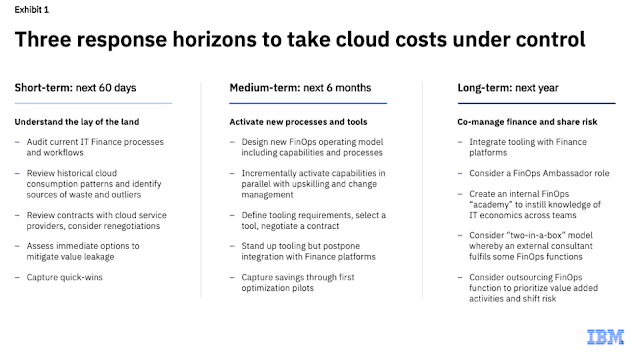
When designing and implementing such an effort, it’s useful to think about three main blocks of activity across short, medium and long-term horizons.
IBM Exam, IBM Exam Study, IBM Career, IBM Skills, IBM Jobs, IBM Tutorial and Materials, IBM Certification

Short-term actions (next 60 days)


The first step for any organization is to get a comprehensive understanding of the real underlying costs of its IT operations — not just cloud, but the entire technology plant. A major life sciences company, for example, employs a dedicated data scientist to conduct a thorough analysis of the output from cloud-native billing tools. Using this data, it creates a granular, component-by-component view of the likely spend outliers or “bad behaviors” of the development teams.

The organization should also embed a third-party observer (internal or external) into the IT finance, procurement and development teams to map out the processes and flaws in existing workflows. Leaders can use this information to come up with a future IT finance strategy, vendor management strategy and optimization opportunities. They can also identify opportunities to rapidly reduce costs through quick changes in how cloud environments operate (e.g., automatically shutting down resources after they are idle for a certain period).

Medium-term actions (next 6 months)


After this orientation, leaders can double down on efforts to redesign and rebuild the internal workflows and processes around financial management — how costs are tracked, aggregated, alerted and reported out to business owners, development teams and senior leadership. This cannot be achieved without building new capabilities outside the conventional playbook. For some companies, it may be enabling chargeback. For others, it may be establishing a way to reconcile budgets with the master budget. Most importantly, it will require building a FinOps “muscle” and knowledge of cloud economics throughout the IT team.

By building out new capabilities and processes, CIOs can deliver step-change improvements in IT and finance operations. One IBM banking client redesigned its entire IT finance function to activate 20 new cloud FinOps capabilities and take advantage of extreme automation, AI/ML and advanced analytics. With the help of this solution, the bank increased cost efficiency of cloud deployments by 30% without affecting the function of applications and systems.

Upskilling everyone in IT to be FinOps-conversant is key. A biomedical research organization, for instance, has established a FinOps academy and dedicated resources for continuous education on IT economics to train developers, product owners and business and financial analysts.

Companies can also take advantage of the modern FinOps and observability tools to further enhance cost controls and establish a “single pane of glass” management console. But the redesigning process always comes first. Tools just reduce reliance on disparate and convoluted cloud-native billing systems.

Longer-term actions (next year or two years)


Over the longer term, companies may want to focus on what’s important: building new products and innovating with the business, not managing IT finance processes and coordination with many engineering teams. This process begins with a re-evaluation of in-house FinOps versus managed-services decisions.

Rapidly rising cloud deployments, the size of the cloud bill (which can reach billions of rows), everchanging complexity and pricing models for services across cloud providers are already driving a shift in how the new IT finance playbook is implemented. Some companies seek to maintain some control and oversight of the process and choose a two-in-a-box model, with third-party FinOps experts embedded in teams. Others outsource the FinOps function to technology consultants who can build the bridge between IT, finance, and procurement, linking with existing systems such as SAP and Workday.

Maximize cloud value while avoiding costs


Cloud is here to stay, but companies must maintain profit margins, stay competitive in established markets and execute operational efficiencies. The CIO is at the heart of this. A new generation CIO will decisively change the way teams create new cloud solutions with IT economics in mind. As IT financial management becomes ingrained into all aspects of the workplace, it will be in the CIO’s best interest to maintain profit margins and reduce the total cost of revenue and total cost of goods sold.

Cost savings start with the right workload placement, and the conversation around hybrid cloud is picking up speed as it allows CIOs to moderate costs while delivering the required performance. Accurate cost models, integrated tools and observability across the technology plant give product, engineering, procurement and finance teams the methodology to realize possible savings and capture the business value expected by the CEO, the board and Wall Street.

Source: ibm.com