Showing posts with label IT Career. Show all posts

Sunday, 28 June 2026

AIX isn't fading: Why the IBM AIX administrator exam matters

An IBM AIX administrator confidently managing advanced IBM Power Systems servers in a modern data center. The image features subtle digital glow effects, symbolizing critical data and the robust, enduring power of AIX v7.3 in enterprise IT. It highlights the value of the S2000-025 certification for career advancement and professional credibility in a real-world, high-tech environment.

In an IT landscape often captivated by the latest cloud solutions and ephemeral trends, some technologies stand the test of time, proving their enduring value and critical role in enterprise infrastructure. IBM AIX is unequivocally one such technology. Far from fading into obsolescence, AIX continues to power mission-critical applications across global industries, from finance to manufacturing, demanding a specialized skill set that remains highly sought after. For IT professionals seeking to validate their expertise and secure their career trajectory, the IBM AIX v7.3 Administrator Specialty certification is more relevant than ever.

This long-form article delves into why the IBM AIX administrator exam, specifically the IBM AIX v7.3 Administrator Specialty exam syllabus (S2000-025), is a pivotal credential for system administrators. We'll explore the enduring significance of AIX, the details of the certification, what it takes to pass, and the tangible benefits it brings to your professional life.

AIX: A Persistent Powerhouse in Enterprise IT

IBM AIX, a proprietary Unix operating system developed by IBM for its Power Systems hardware, has been a cornerstone of enterprise computing for decades. Its reputation for unparalleled stability, robust security, and exceptional performance makes it the platform of choice for demanding workloads, including databases, ERP systems, and custom applications where downtime is simply not an option. While new technologies emerge, AIX's proven reliability and established ecosystem ensure its continued dominance in specific, high-value niches.

Why AIX Continues to Thrive

Many might wonder about the longevity of a traditional operating system in a cloud-first world. The answer lies in AIX's unique strengths:

  • **Rock-Solid Stability:** AIX systems are engineered for continuous operation, offering uptime statistics that often surpass other platforms.
  • **Exceptional Performance:** Optimized to leverage IBM Power Systems hardware, AIX delivers superior performance for data-intensive and computationally heavy applications.
  • **Robust Security:** With advanced security features and a long history of addressing enterprise-level threats, AIX provides a highly secure environment.
  • **Scalability and Flexibility:** AIX on Power Systems offers impressive scalability, allowing businesses to expand resources as their needs grow without major overhauls.
  • **Mature Ecosystem:** A wealth of tools, support, and experienced professionals underpin the AIX environment, ensuring comprehensive support and problem-solving capabilities.

These attributes ensure that AIX remains an indispensable asset for organizations that prioritize stability, security, and performance above all else. Consequently, the demand for skilled IBM AIX v7.3 system administrator professionals remains consistently high.

The IBM AIX v7.3 Administrator Specialty Certification (S2000-025): A Mark of Expertise

For individuals managing or aspiring to manage AIX environments, the IBM AIX administrator exam is not just a piece of paper; it's a testament to your ability to administer, maintain, and troubleshoot one of the industry's most critical operating systems. The IBM AIX v7.3 Administrator Specialty certification, specifically exam S2000-025, validates your proficiency in the latest iteration of AIX, ensuring you're equipped with up-to-date skills for modern enterprise demands.

Why This Certification Matters for Your Career

Earning the IBM AIX v7.3 Administrator Specialty certification signifies to employers that you possess a deep understanding of AIX v7.3. It demonstrates your capability to handle complex system administration tasks, optimize performance, and maintain the integrity and security of vital systems. This distinction can lead to significant career advantages, from increased earning potential to greater job opportunities and enhanced professional credibility.

Understanding the IBM S2000-025 Exam Details

Before embarking on your certification journey, it's crucial to understand the specifics of the IBM AIX v7.3 Administrator Specialty exam. This will help you formulate an effective study plan and manage your expectations.

Exam Overview:

  • Exam Name: IBM AIX v7.3 Administrator Specialty
  • Exam Code: S2000-025
  • Exam Price: $100 (USD)
  • Duration: 75 minutes
  • Number of Questions: 45
  • Passing Score: 71%

The exam is designed to assess your practical knowledge and ability to apply AIX administration principles in real-world scenarios. A passing score of 71% requires a thorough understanding of all topics covered in the IBM AIX v7.3 Administrator Specialty exam curriculum.

Scheduling Your Exam

Once you feel prepared, you can schedule your S2000-025 exam through the official testing partner. Details on available test centers and online proctoring options can be found on the Pearson VUE website for IBM exams.

Deep Dive into the AIX Administrator Specialty Certification Topics (Syllabus Breakdown)

The S2000-025 IBM AIX v7.3 Administrator Specialty exam measures a candidate's proficiency across several critical domains of AIX administration. A comprehensive IBM S2000-025 exam study guide must cover each of these areas in depth. Here's a detailed look at the AIX Administrator Specialty certification topics:

Setup (15%)

This section focuses on the initial installation and configuration of AIX systems. It covers understanding hardware requirements, installation methods (NIM, media), initial system configuration, and managing installation options. Mastery here ensures you can successfully deploy an AIX environment from scratch, a fundamental skill for any administrator.

Operations (15%)

Daily administrative tasks are the backbone of this domain. It includes user and group management, process management, scheduling jobs with cron and at, managing logical volumes, and understanding system startup and shutdown procedures. This section is vital for maintaining the day-to-day health and functionality of an AIX system.

Storage Management (13%)

Effective management of storage is crucial for performance and data integrity. This topic delves into Logical Volume Manager (LVM) concepts, creating and managing volume groups, logical volumes, and file systems. It also includes understanding various storage technologies, such as SAN and NAS, and configuring disk arrays. Given the data-intensive nature of many AIX applications, this is a critical skill.

System Security (12%)

Protecting AIX systems from unauthorized access and cyber threats is paramount. This section covers user authentication, password policies, file and directory permissions, auditing, and implementing security best practices. Understanding AIX security features and how to configure them is essential for maintaining a secure enterprise environment.

Network Management (10%)

Connectivity is key for any enterprise system. This domain addresses configuring network interfaces, managing TCP/IP settings, understanding routing, and troubleshooting network connectivity issues. Knowledge of network services and their configuration within AIX is also assessed.

Performance Management and Tuning (15%)

Optimizing system performance is a highly valued skill. This topic covers identifying performance bottlenecks, using AIX performance monitoring tools (e.g., nmon, vmstat, iostat), and applying tuning techniques for CPU, memory, I/O, and network. A proficient AIX administrator can ensure systems run efficiently and meet application demands.

Problem Determination and Management (15%)

When issues arise, an administrator's ability to diagnose and resolve problems quickly is invaluable. This section focuses on using AIX diagnostic tools, interpreting error logs, understanding system dumps, and implementing effective problem resolution strategies. It emphasizes a systematic approach to troubleshooting complex system issues.

Version 7.3 Specific Changes (5%)

Staying current with the latest features and enhancements is vital. This smaller but important section covers new functionalities, deprecated features, and significant changes introduced in AIX v7.3 compared to previous versions. It ensures candidates are familiar with the modern capabilities and nuances of the operating system.

Benefits of Achieving IBM AIX Administrator Specialty Certification

Investing in the IBM AIX v7.3 Administrator Specialty certification offers a multitude of professional advantages, cementing your position as a highly capable IT professional.

Career Advancement and Opportunities

Certification often acts as a fast-track to career progression. Employers recognize certified individuals as possessing proven skills, making them prime candidates for promotions or roles with greater responsibility. This certification opens doors to specialized administrator, engineer, and architect positions within organizations reliant on AIX.

Enhanced Professional Credibility and Recognition

The IBM AIX v7.3 Administrator Specialty is an industry-recognized credential from a leading technology vendor. It provides tangible proof of your expertise, distinguishing you from non-certified peers and boosting your professional standing within the IT community.

Competitive Edge in the Job Market

In a competitive job market, certifications can be the deciding factor. When seeking new opportunities, having the IBM AIX v7.3 Administrator Specialty on your resume will make you a more attractive candidate, demonstrating your commitment to continuous learning and mastery of critical systems.

Increased Earning Potential

Certified professionals typically command higher salaries than their uncertified counterparts. The specialized nature of AIX administration, coupled with a formal certification, often translates into a premium on your skills. According to the U.S. Bureau of Labor Statistics, job prospects for computer and information technology occupations are projected to grow much faster than the average for all occupations, and specialized skills like AIX administration often fetch above-average compensation.

Job Security

As long as major enterprises continue to rely on AIX for their most critical operations, the demand for skilled administrators will persist. This certification helps secure your role in an evolving IT landscape by making you indispensable to organizations running these systems.

Preparing for the IBM AIX v7.3 Administrator Exam: Your Path to Success

Successfully passing the S2000-025 exam requires a strategic and disciplined approach. Here's how to prepare for IBM AIX Administrator Specialty certification effectively:

1. Understand the Syllabus Thoroughly

Start by meticulously reviewing the S2000-025 IBM AIX v7.3 Administrator Specialty exam details and syllabus. Create a study plan that allocates sufficient time to each topic area, giving extra attention to areas where you feel less confident. Focus on the weighting of each section to prioritize your efforts. For an effective study guide, look at how the official resources structure their content, as they align directly with the exam objectives.

2. Leverage Official IBM Training Courses

IBM offers a range of official courses designed to prepare you for the certification. These courses provide in-depth knowledge and hands-on experience crucial for mastering AIX administration. Highly recommended IBM AIX v7.3 Administrator Specialty training courses include:

These courses provide structured learning paths and practical exercises that are invaluable for exam preparation and real-world application.

3. Hands-on Experience is Key

Theoretical knowledge alone is often insufficient. Practical experience with AIX is paramount. If you don't have access to a live AIX environment, consider setting up a virtualized AIX instance (if licensed) or using lab environments provided by training partners. Performing tasks related to setup, storage, networking, and security will solidify your understanding.

Exploring a recent IBM study on business leadership can offer insights into the broader strategic context of IT skills and how they impact enterprise success. This perspective can enhance your understanding of the value you bring as a certified administrator.

4. Utilize Practice Questions and Study Resources

Look for reliable IBM AIX v7.3 administrator exam practice questions. These help you become familiar with the exam format, question types, and time constraints. While practice questions shouldn't be your only study method, they are excellent for self-assessment and identifying weak areas. Combine this with official documentation and reputable third-party study guides to create the best resources for IBM AIX v7.3 Administrator Specialty exam preparation.

5. Join Study Groups and Forums

Collaborating with other professionals preparing for the same exam can be highly beneficial. Study groups allow you to discuss challenging concepts, share insights, and clarify doubts. Online forums dedicated to AIX administration are also great places to ask questions and learn from experienced practitioners.

6. Time Management and Consistent Study

Given the depth of topics, consistent study over several weeks or months is more effective than cramming. Develop a realistic study schedule and stick to it. Regular reviews of previously covered material will help reinforce your learning and improve retention.

Who Should Pursue the IBM AIX Administrator Specialty Certification?

This certification is ideal for:

  • Experienced UNIX/Linux administrators looking to specialize in IBM AIX.
  • System administrators currently working with AIX who want to validate their skills.
  • IT professionals aiming to advance their careers in enterprise infrastructure management.
  • Consultants and solution architects involved in designing or implementing AIX-based solutions.

AIX Administrator Specialty Certification Prerequisites

While IBM does not explicitly state mandatory AIX Administrator Specialty certification prerequisites, it is highly recommended that candidates have:

  • At least one to two years of experience working with AIX in an administrative role.
  • A solid understanding of basic UNIX/Linux commands and concepts.
  • Familiarity with shell scripting.

Having practical experience before attempting the exam will significantly increase your chances of achieving the passing score for IBM AIX S2000-025 exam.

FAQs about the IBM AIX Administrator Exam

1. What is the IBM AIX v7.3 Administrator Specialty certification?

The IBM AIX v7.3 Administrator Specialty certification is a professional credential from IBM that validates an individual's skills and knowledge in administering, maintaining, and troubleshooting IBM AIX v7.3 operating systems on Power Systems hardware. It demonstrates proficiency in key areas such as setup, operations, storage, security, and performance management.

2. How much does the IBM AIX v7.3 certification cost?

The IBM AIX v7.3 certification cost for the S2000-025 exam is $100 USD. This price may vary slightly depending on your region due to local taxes or currency conversion rates.

3. How can I best prepare for the S2000-025 IBM AIX v7.3 exam curriculum?

Effective preparation for the S2000-025 IBM AIX v7.3 exam curriculum involves a multi-faceted approach: reviewing the official syllabus, undertaking IBM's recommended training courses, gaining significant hands-on experience, utilizing practice questions, and participating in study groups. Consistent study and practical application of concepts are crucial.

4. What kind of salary can I expect with an AIX v7.3 administrator certification?

While specific salaries vary based on experience, location, and company, possessing the IBM AIX v7.3 Administrator Specialty certification typically places you in a higher earning bracket. Skilled AIX administrators are in demand for managing critical enterprise systems, often commanding competitive salaries. The AIX v7.3 administrator jobs salary is generally above average for IT professionals due to the specialized nature of the role.

5. Are there any prerequisites for taking the IBM S2000-025 exam?

While there are no strict mandatory AIX Administrator Specialty certification prerequisites stated by IBM for taking the S2000-025 exam, it is highly recommended to have at least 1-2 years of practical experience with AIX administration and a foundational understanding of UNIX/Linux operating systems. This experience will significantly improve your chances of passing the exam.

Conclusion

The notion that AIX is fading is a myth. For organizations that cannot compromise on performance, security, and stability, IBM AIX on Power Systems remains a cornerstone of their IT infrastructure. The IBM AIX v7.3 Administrator Specialty certification (S2000-025) is therefore not just a valuable credential; it's a strategic investment in your professional future.

By demonstrating expertise in v7.3, you position yourself as an indispensable asset capable of managing critical enterprise systems. The journey to certification requires dedication, but the benefits of IBM AIX Administrator Specialty certification, including career advancement, increased earning potential, and enhanced credibility, make it a worthwhile pursuit. Explore how IBM solutions are driving innovation in various sectors, such as insurance, to understand the diverse impact of IBM technologies and the vital role administrators play in their success by reviewing examples of IBM assisting the insurance sector.

Take the proactive step to validate your skills, deepen your knowledge, and secure your place in the specialized world of AIX administration. Begin your preparation for the IBM AIX administrator exam today and unlock new opportunities in your IT career.


Saturday, 13 June 2026

Unlock Your IBM Cloud Pak Admin Career Potential Today

A professional person analyzing a holographic display showing complex IBM Cloud Pak for Business Automation architecture and data flows, representing strategic preparation for the C1000-150 exam.

In today's rapidly evolving digital landscape, businesses are increasingly reliant on automation to streamline operations, enhance efficiency, and drive innovation. At the heart of this transformation lies robust platforms like IBM Cloud Pak for Business Automation. For IT professionals seeking to elevate their careers, mastering this platform is not just an advantage—it's a necessity. The IBM Certified Administrator - IBM Cloud Pak for Business Automation v21.0.3 certification, earned by passing the C1000-150 exam, is your definitive pathway to becoming a recognized expert in this critical field.

This comprehensive guide is designed to provide you with an insightful, career-mapped, and practical roadmap to conquer the IBM Cloud Pak admin exam. We'll delve into everything you need to know, from understanding the exam syllabus and effective study strategies to exploring the lucrative career opportunities that await a certified IBM Cloud Pak for Business Automation v21.0.3 administrator. Prepare to unlock your full potential and solidify your position as a valuable asset in the world of enterprise automation.

Why the IBM Cloud Pak for Business Automation Certification Matters

The journey to becoming an IBM Certified Administrator - IBM Cloud Pak for Business Automation v21.0.3 is more than just passing an exam; it's about validating a highly sought-after skill set. In a market where digital transformation is paramount, organizations are actively seeking professionals who can efficiently deploy, manage, and troubleshoot complex automation solutions. This certification from IBM serves as a testament to your ability to handle the intricacies of Cloud Pak for Business Automation, demonstrating your competence to potential employers.

Validation of Expertise

The C1000-150 exam rigorously tests your understanding across various domains, ensuring that certified individuals possess a well-rounded skill set. This isn't just theoretical knowledge; it's about practical application in real-world scenarios. Achieving this certification signifies that you have the hands-on expertise required to manage a critical business automation platform, giving you a distinct advantage in the job market.

Competitive Edge in the Job Market

Possessing an IBM certification immediately sets you apart from your peers. It signals to employers that you are committed to professional development and have invested in acquiring specialized skills directly relevant to their technological infrastructure. For roles involving the management of cloud-native automation solutions, the IBM Cloud Pak for Business Automation v21.0.3 certification is often a key differentiator, enhancing your resume and improving your chances of securing high-demand positions.

Enhanced Career Advancement and Salary Potential

As an IBM Certified Administrator, you're not just qualified for entry-level positions; you're prepared for roles with greater responsibility and strategic importance. This certification can open doors to senior administrator roles, consultant positions, or even architect roles, leading to significant career advancement. Furthermore, professionals holding specialized certifications like this often command higher salaries due to the scarcity of their expertise and the critical nature of their work. Understanding the typical salary expectations for computer and information technology professionals can provide valuable insight into the financial benefits.

Industry Relevance and Future-Proofing Your Skills

IBM Cloud Pak for Business Automation is a cornerstone of modern enterprise automation strategies, integrating capabilities like Robotic Process Automation (RPA), Business Process Management (BPM), Decision Management, and Content Services. By becoming certified, you align your skills with the current and future demands of the industry. This investment in your professional development ensures that your expertise remains relevant and valuable as technology continues to evolve. For more details on the certification, visit the official IBM certification page.

Understanding the IBM C1000-150 Exam: The Gateway to Expertise

The IBM Cloud Pak for Business Automation v21.0.3 Administration exam (C1000-150) is meticulously designed to assess a candidate's proficiency in administering the IBM Cloud Pak for Business Automation platform. This exam is a critical step towards earning the esteemed IBM Certified Administrator - IBM Cloud Pak for Business Automation v21.0.3 certification.

Exam Details at a Glance

  • Exam Name: IBM Certified Administrator - IBM Cloud Pak for Business Automation v21.0.3
  • Exam Code: C1000-150
  • Exam Price: $200 (USD)
  • Duration: 90 minutes
  • Number of Questions: 60 multiple-choice questions
  • Passing Score: 65%

These details are crucial for planning your study schedule and budgeting. The 90-minute duration for 60 questions means you have approximately 1.5 minutes per question, highlighting the need for quick recall and efficient problem-solving skills.

Who Should Take This Exam?

This exam is ideal for system administrators, technical support professionals, and anyone responsible for the deployment, administration, management, and troubleshooting of IBM Cloud Pak for Business Automation v21.0.3 solutions. Candidates should have a foundational understanding of containerization technologies like Kubernetes and OpenShift, as well as experience with cloud environments.

For a detailed breakdown of the exam's content and objectives, you can always refer to the IBM Cloud Pak Business Automation Administration exam syllabus, which serves as your definitive guide to the topics covered.

A Deep Dive into the IBM C1000-150 Exam Syllabus

The IBM C1000-150 exam syllabus is structured into five key sections, each carrying a specific weight. Understanding these percentages will help you prioritize your study efforts and allocate your time effectively. Mastering these domains is crucial for any aspiring IBM Cloud Pak for Business Automation v21.0.3 administrator.

Planning and Install (26%)

This section is foundational, covering the crucial steps involved in preparing for and deploying IBM Cloud Pak for Business Automation. It's not just about running an installer; it's about understanding the underlying architecture and making informed decisions that ensure a robust and scalable environment.

  • Pre-installation Considerations: This includes understanding hardware and software requirements, network configurations, storage considerations, and sizing recommendations. You'll need to know how to plan for capacity, ensuring the platform can handle current and future workloads.
  • Containerization Fundamentals: A strong grasp of Kubernetes and Red Hat OpenShift is essential. This involves understanding pods, deployments, services, routes, namespaces, and operators—the building blocks of a cloud-native deployment.
  • Installation and Configuration: This covers the practical steps of deploying the Cloud Pak, including setting up OpenShift clusters, configuring storage classes, installing the IBM Cloud Pak foundational services, and deploying the Business Automation components. Knowledge of various deployment patterns (e.g., development, production) is also important.
  • Customization and Post-installation Tasks: After the initial setup, administrators often need to perform various customization tasks, such as integrating with existing systems, configuring external databases, and ensuring all components are correctly initialized and communicating.

A solid understanding here sets the stage for everything else. Without a proper plan and installation, the system will not perform optimally or securely.

Troubleshooting (27%)

As an administrator, you'll inevitably face issues. This section, the most heavily weighted, focuses on your ability to diagnose and resolve problems efficiently, minimizing downtime and ensuring business continuity. Effective troubleshooting skills are a hallmark of an experienced IBM Cloud Pak for Business Automation v21.0.3 administrator.

  • Log Analysis: Understanding how to access, interpret, and analyze logs from various Cloud Pak components, OpenShift, and underlying infrastructure is paramount. This includes knowing where to find logs (e.g., `oc logs`, ELK stack), common error patterns, and how to use logging tools effectively.
  • Monitoring and Diagnostics: Utilizing monitoring tools like Grafana, Prometheus, and the OpenShift console to identify performance bottlenecks, resource constraints, and health issues. Being able to interpret metrics and dashboards is key to proactive problem-solving.
  • Problem Isolation and Resolution: Systematically approaching problems, isolating the faulty component, and applying appropriate fixes. This includes knowledge of common issues related to network, storage, database, authentication, and application-specific errors within the Cloud Pak.
  • kubectl and oc Commands: Proficiency in using Kubernetes (`kubectl`) and OpenShift (`oc`) command-line tools for inspecting pods, deployments, services, and events to gather diagnostic information and execute corrective actions.
  • Documentation and Support: Knowing how to leverage IBM documentation, knowledge bases, and support channels to find solutions to complex problems, and understanding when to escalate issues to IBM support.

Proficiency in this domain ensures operational stability and quick recovery from unforeseen challenges.

Security (17%)

Security is non-negotiable in any enterprise environment, especially for a platform handling critical business processes. This section of the IBM C1000-150 exam syllabus focuses on your ability to secure the IBM Cloud Pak for Business Automation environment against unauthorized access and threats, aligning with the `IBM Cloud Pak for Business Automation administration skills` required in modern IT.

  • User and Role Management: Configuring and managing users, groups, and roles within the Cloud Pak and OpenShift. This includes understanding role-based access control (RBAC) and how to assign appropriate permissions to ensure least privilege principles are followed.
  • Authentication and Authorization: Integrating with enterprise identity providers (e.g., LDAP, SAML, OAuth), configuring Single Sign-On (SSO), and managing API keys and tokens. Ensuring secure access to all Cloud Pak components is critical.
  • Network Security: Configuring network policies, firewalls, and ingress/egress rules to secure communication within the cluster and with external services. Understanding secure communication protocols like TLS/SSL is also important.
  • Data Protection: Implementing data encryption at rest and in transit, managing secrets, and ensuring compliance with data privacy regulations. This involves protecting sensitive business data processed by the automation components.
  • Auditing and Compliance: Configuring audit logging, monitoring security events, and understanding how to maintain compliance with organizational security policies and industry standards.

A secure platform instills confidence and protects valuable business assets.

Resiliency (10%)

While this section has a smaller percentage, its importance cannot be overstated. Resiliency ensures that the Cloud Pak for Business Automation remains operational even in the face of failures, guaranteeing high availability and disaster recovery capabilities. This topic directly addresses the `IBM Cloud Pak for Business Automation certification path` for administrators focusing on robust systems.

  • Backup and Restore: Implementing comprehensive backup strategies for Cloud Pak data and configurations. This includes understanding different backup methods, recovery point objectives (RPO), and recovery time objectives (RTO), as well as performing successful restore operations.
  • High Availability (HA): Configuring and managing highly available Cloud Pak components, ensuring that workloads can seamlessly failover to healthy instances in case of component failure. This involves understanding OpenShift's HA features and Cloud Pak component-specific HA settings.
  • Disaster Recovery (DR): Planning and implementing strategies for recovering the entire Cloud Pak environment in a geographically separate location in the event of a major disaster. This includes understanding replication, failover, and failback procedures.
  • Scaling: Dynamically scaling Cloud Pak components to handle varying workloads, ensuring optimal performance and resource utilization. This involves horizontal and vertical scaling techniques within OpenShift.

A resilient system is critical for business continuity and minimizing the impact of unforeseen events.

Management (20%)

This section covers the day-to-day operational aspects of administering IBM Cloud Pak for Business Automation, ensuring its smooth running, optimal performance, and continuous improvement. It encompasses ongoing tasks that keep the platform healthy and efficient.

  • Monitoring and Performance Tuning: Regularly monitoring system health, resource utilization, and application performance. Identifying and implementing performance tuning strategies for databases, application servers, and other Cloud Pak components to ensure optimal operation.
  • Lifecycle Management: Managing the lifecycle of the Cloud Pak components, including applying patches, updates, and upgrades. Understanding version compatibility and the upgrade path is crucial to avoid disruptions.
  • Resource Management: Efficiently allocating and managing CPU, memory, storage, and network resources for Cloud Pak components within the OpenShift cluster. Optimizing resource utilization to control costs and ensure performance.
  • Configuration Management: Maintaining consistent configurations across environments, using tools and practices for configuration as code where appropriate, and managing configuration drifts.
  • Automation and Orchestration: Leveraging automation scripts and tools to streamline routine administrative tasks, improve efficiency, and reduce manual errors.

Effective management ensures that the Cloud Pak for Business Automation continually delivers value to the business.

Crafting Your Success: Preparing for the C1000-150 Exam

Passing the IBM Cloud Pak admin exam, C1000-150, requires a strategic and disciplined approach. Merely reading documentation won't suffice; you need to engage with the material, practice extensively, and simulate exam conditions. Here's a detailed guide to help you formulate an effective study plan and ensure you know `how to pass IBM C1000-150 exam`.

Official Training and Documentation

IBM provides official resources specifically designed to prepare you for their certifications. These are your primary sources of accurate and comprehensive information.

  • IBM Learning Paths: The recommended starting point is the official IBM Learning Path. For this exam, the Administrator: IBM Cloud Pak for Business Automation learning path provides structured content, tutorials, and labs that align directly with the exam objectives. This covers the `IBM Cloud Pak for Business Automation v21.0.3 training` required.
  • IBM Documentation: Thoroughly review the official IBM Cloud Pak for Business Automation v21.0.3 documentation. This includes installation guides, administration guides, troubleshooting manuals, and security best practices. Pay close attention to configuration parameters, command-line interfaces, and architectural diagrams.
  • IBM Redbooks and Whitepapers: These resources offer deeper insights into specific topics, best practices, and real-world implementation scenarios. They can provide valuable context and practical knowledge that complements the core documentation.

Hands-on Experience is Key

Theory without practice is often incomplete. The C1000-150 exam is practical, and real-world experience with the platform is invaluable.

  • Set up a Lab Environment: If possible, create your own sandbox environment. This could be on a cloud provider (e.g., IBM Cloud, AWS, Azure) or a virtualized environment on your local machine. Deploying and configuring a scaled-down version of IBM Cloud Pak for Business Automation will give you direct experience with installation, configuration, and management tasks.
  • Practice Scenarios: Actively engage in practical exercises. For instance, try to deploy specific components, configure security settings, simulate failures and troubleshoot them, perform backup and restore operations, and monitor performance. The more you interact with the platform, the more confident you'll become.
  • Work with Real-World Projects: If you're already in an IT role, seek opportunities to work with IBM Cloud Pak for Business Automation in your daily tasks. Even small contributions can significantly enhance your practical understanding. For example, understanding how business leaders can leverage new IBM studies can provide context for the kind of challenges you might face when managing such systems.

Practice Tests and Study Guides

Once you've gained a good theoretical foundation and some hands-on experience, it's time to test your knowledge.

  • IBM C1000-150 Practice Test: Look for reputable practice tests that simulate the actual exam format and question types. These are excellent for identifying your weak areas, understanding the exam's difficulty, and getting accustomed to the time constraints. Use them not just to get answers right, but to understand *why* an answer is correct or incorrect.
  • Create Your Own Study Guide: As you go through the documentation and practice, consolidate your notes into your own personalized `IBM C1000-150 study guide`. Include key concepts, commands, configurations, and troubleshooting steps. This active process of summarizing reinforces learning.
  • Review Exam Objectives: Regularly revisit the `IBM Certified Administrator Cloud Pak for Business Automation objectives` to ensure your study plan covers all required areas. Cross-reference your notes and practice results with these objectives.

Community and Study Groups

Learning doesn't have to be a solitary endeavor. Engaging with a community can provide fresh perspectives and support.

  • Online Forums and Communities: Join IBM developer forums, Cloud Pak user groups, and relevant online communities (e.g., Reddit, LinkedIn groups). Ask questions, share your insights, and learn from others' experiences.
  • Study Partners: Team up with a study partner or form a small study group. Discussing topics, explaining concepts to each other, and collaboratively solving problems can deepen your understanding and identify gaps in your knowledge.

Strategic Review of Exam Topics

Given the percentage weighting of the syllabus, tailor your review strategy:

  • Prioritize High-Weight Areas: Spend more time on 'Troubleshooting' (27%) and 'Planning and Install' (26%) as they constitute over half of the exam.
  • Don't Neglect Smaller Sections: While 'Resiliency' (10%) is smaller, it covers critical aspects like backup and disaster recovery. Ensure you understand these fundamental concepts thoroughly.
  • Focus on Practical Application: Many questions will test scenario-based understanding. Think about how concepts apply in real-world administrative tasks.

By diligently following these preparation steps, you'll be well-equipped to tackle the IBM C1000-150 exam and achieve your certification goals. This holistic approach combining theoretical knowledge, practical experience, and strategic review is the `best resources for IBM C1000-150` success.

Navigating the Exam Day and Scheduling

Once you've meticulously prepared for the IBM Cloud Pak admin exam, the next crucial step is to understand the logistics of scheduling and what to expect on exam day. Proper planning ensures a smooth and stress-free experience, allowing you to focus purely on demonstrating your knowledge.

Exam Registration Process

IBM certifications are typically administered through Pearson VUE. The process is straightforward:

  1. Create an Account: If you don't already have one, create an account on the Pearson VUE website. Ensure your personal details match your identification documents precisely.
  2. Locate the Exam: Search for the C1000-150 exam within the Pearson VUE portal.
  3. Choose Your Test Center or Online Proctoring: You have the option to take the exam at a physical test center or via online proctoring from your home or office. Both options have specific requirements you must meet. Online proctoring requires a stable internet connection, a quiet environment, and a working webcam and microphone.
  4. Select Date and Time: Choose a date and time that aligns with your study schedule and peak performance hours.
  5. Complete Payment: The `IBM C1000-150 exam cost` is $200 (USD). Complete the payment process to confirm your registration.

For scheduling your IBM certification exam, visit the Pearson VUE IBM registration page.

What to Expect on Exam Day (In-Person or Online)

For Test Center Exams:

  • Arrive Early: Aim to arrive at least 15-30 minutes before your scheduled exam time. This allows for check-in procedures without feeling rushed.
  • Bring Valid ID: You will need two forms of identification, typically a government-issued photo ID (e.g., passport, driver's license) and another form of ID with your signature. Confirm specific ID requirements with Pearson VUE.
  • Prohibited Items: Be aware that personal items like phones, bags, notes, and watches are usually not allowed in the testing room. Lockers are often provided.
  • Familiarize Yourself with the Interface: The testing interface is generally user-friendly, but take a moment to understand how to navigate questions, mark for review, and submit your exam.

For Online Proctored Exams:

  • System Check: Perform a system compatibility check well in advance to ensure your computer, internet connection, webcam, and microphone meet all requirements.
  • Clear Your Workspace: Your testing area must be free of clutter, notes, books, and other unauthorized materials. The proctor will ask you to show your room.
  • Be Ready for Check-in: Log in early for your exam. The check-in process involves identity verification, photos of your workspace, and communication with the proctor.
  • Maintain Focus: During the exam, you must remain in view of the camera, avoid speaking aloud, and refrain from using any prohibited items. Any suspicious activity could lead to exam invalidation.

Tips for Optimal Performance on Exam Day

  • Get Adequate Rest: A well-rested mind performs better. Prioritize a good night's sleep before the exam.
  • Light Meal and Hydration: Eat a light, healthy meal and stay hydrated. Avoid heavy foods that might make you feel sluggish.
  • Read Questions Carefully: Take your time to read each question and all answer choices thoroughly before selecting your response. Misinterpreting a question is a common mistake.
  • Manage Your Time: Keep an eye on the clock. If you get stuck on a question, make an educated guess, mark it for review (if allowed), and move on. You can return to it if you have time at the end.
  • Stay Calm: It's natural to feel some anxiety. Take a deep breath if you feel overwhelmed. Trust in your preparation.

By preparing both intellectually and logistically, you can approach the IBM C1000-150 exam with confidence and increase your chances of success.

Career Trajectory with IBM Cloud Pak for Business Automation Certification

Earning the IBM Certified Administrator - IBM Cloud Pak for Business Automation v21.0.3 certification is not just an achievement; it's a strategic move that significantly enhances your career prospects. The demand for skilled professionals who can manage complex automation platforms is on a continuous rise, opening a multitude of exciting job opportunities across various industries.

Key Job Roles and Responsibilities

This certification prepares you for a range of critical roles within an organization:

  • IBM Cloud Pak for Business Automation Administrator: This is the most direct role, involving day-to-day management, monitoring, troubleshooting, and maintenance of the Cloud Pak environment. Responsibilities include deploying new automation solutions, ensuring system health, managing user access, and optimizing performance. These roles are essential for organizations leveraging IBM's comprehensive automation suite.
  • Automation Specialist/Engineer: While administrators focus on the platform, an automation specialist might focus more on designing, developing, and implementing specific automation workflows using the Cloud Pak's capabilities (e.g., RPA, BPM). A certified administrator understands the underlying platform well enough to support these specialists effectively.
  • DevOps Engineer: Professionals in DevOps roles, especially those involved with cloud-native applications and continuous delivery, will find this certification highly beneficial. It equips them with the knowledge to automate the deployment, scaling, and management of Cloud Pak for Business Automation components within a CI/CD pipeline.
  • Solutions Architect: With experience, a certified administrator can transition into a Solutions Architect role. Here, they would design robust, scalable, and secure automation solutions using IBM Cloud Pak for Business Automation, considering business requirements, technical constraints, and future growth.
  • Technical Consultant: External consultants often advise clients on implementing and optimizing their IBM Cloud Pak for Business Automation deployments. This certification provides the necessary credibility and foundational knowledge to excel in such advisory roles.

These roles collectively underscore the high demand for professionals with robust `IBM Cloud Pak for Business Automation administration skills`.

Salary Potential and Industry Demand

The specialized nature of IBM Cloud Pak for Business Automation administration translates into competitive salaries. Companies are willing to invest in professionals who can manage platforms critical to their operational efficiency and digital transformation initiatives. While salaries vary based on location, experience, and specific company, certified professionals generally command above-average compensation.

According to the U.S. Bureau of Labor Statistics, the median annual wage for computer and information technology occupations was significantly higher than the median for all occupations, indicating a robust job market for skilled IT professionals. Specialized certifications like the C1000-150 further enhance earning potential. The `IBM Cloud Pak for Business Automation administrator salary` can be very attractive, reflecting the expertise required.

The increasing adoption of cloud-native automation solutions ensures a strong and growing demand for `IBM Cloud Pak for Business Automation v21.0.3 administrator jobs`. This certification puts you on a solid `IBM Cloud Pak for Business Automation certification path` towards a rewarding and future-proof career.

The Future of Automation with IBM Cloud Pak

IBM Cloud Pak for Business Automation is not merely a collection of tools; it's a strategic platform designed to empower organizations to drive intelligent automation across their enterprise. As businesses continue their digital transformation journeys, the importance of integrated automation solutions will only grow, solidifying the role of the certified administrator.

Evolving Landscape of Business Automation

The future of automation is characterized by increased intelligence, hyper-automation, and seamless integration. IBM Cloud Pak for Business Automation is at the forefront of this evolution, bringing together AI, RPA, BPM, and other capabilities to create end-to-end automated workflows. Administrators of this platform will be key players in leveraging these advanced features to solve complex business problems, optimize processes, and deliver tangible value.

IBM's Commitment to Innovation

IBM continuously invests in research and development, ensuring that its Cloud Pak offerings remain cutting-edge. As new versions and features are released, certified administrators will have the opportunity to expand their knowledge, adapt to new technologies, and maintain their relevance in the field. This commitment to innovation means your investment in an IBM certification is an investment in a dynamic and evolving career path.

Continuous Learning and Skill Upgrading

The IT landscape is never static. To truly excel as an IBM Cloud Pak for Business Automation administrator, a commitment to continuous learning is essential. This includes staying updated with new versions of the Cloud Pak, exploring complementary IBM technologies, and perhaps pursuing advanced certifications. The C1000-150 exam is a fantastic starting point, but the journey of learning and professional growth is ongoing.

Frequently Asked Questions (FAQs)

1. What is the IBM C1000-150 exam?

The IBM C1000-150 exam, officially known as the IBM Cloud Pak for Business Automation v21.0.3 Administration exam, is a certification test designed to validate an administrator's skills and knowledge in deploying, managing, and troubleshooting the IBM Cloud Pak for Business Automation platform. Passing this exam leads to the IBM Certified Administrator - IBM Cloud Pak for Business Automation v21.0.3 certification.

2. What skills does the IBM Cloud Pak for Business Automation v21.0.3 certification validate?

This certification validates a comprehensive set of skills including planning and installation of the Cloud Pak, effective troubleshooting techniques, implementing and maintaining security measures, ensuring system resiliency (backup, recovery, high availability), and performing day-to-day management tasks such as monitoring, performance tuning, and lifecycle management. It covers the core `IBM Cloud Pak for Business Automation administration skills` necessary for success.

3. How much does the IBM C1000-150 exam cost?

The `IBM C1000-150 exam cost` is $200 USD. However, prices may vary slightly based on your region due to local taxes or currency conversions. It's always advisable to check the current pricing on the Pearson VUE website before registration.

4. What are the best resources for the IBM Cloud Pak admin exam?

The best resources include the official IBM Learning Path for Administrator: IBM Cloud Pak for Business Automation, comprehensive IBM documentation for version 21.0.3, hands-on experience through lab environments, reputable `IBM C1000-150 practice test` materials, and active participation in IBM developer communities and forums. Combining these resources offers the most effective `IBM C1000-150 study guide`.

5. What job opportunities open up with this certification?

Earning the IBM Cloud Pak for Business Automation v21.0.3 certification opens doors to roles such as IBM Cloud Pak for Business Automation Administrator, Automation Specialist/Engineer, DevOps Engineer focusing on automation, and even Solutions Architect or Technical Consultant. These roles are in high demand across industries undergoing digital transformation, offering excellent `IBM Cloud Pak for Business Automation v21.0.3 administrator jobs` opportunities.

Conclusion

The journey to becoming an IBM Certified Administrator - IBM Cloud Pak for Business Automation v21.0.3 is a powerful investment in your professional future. By mastering the intricate details of planning, installing, troubleshooting, securing, ensuring resiliency, and managing this robust platform, you position yourself as an indispensable asset in the era of intelligent automation. The C1000-150 exam is your gateway to validating these critical skills and unlocking unparalleled career growth, competitive salaries, and a future-proof skill set.

The demand for skilled professionals who can navigate the complexities of modern business automation solutions continues to soar. By taking the initiative to earn this certification, you not only demonstrate your technical prowess but also your commitment to continuous learning and professional excellence. Equip yourself with the knowledge to drive impactful automation strategies, much like how businesses are always looking for scalable planning analytics from IBM.

Don't let your career potential remain untapped. Start your preparation for the IBM Cloud Pak admin exam today. Dive into the official learning paths, get hands-on experience, utilize practice tests, and embrace the challenge. Your future as a highly sought-after IBM Cloud Pak for Business Automation v21.0.3 administrator begins now. Take the leap, get certified, and elevate your professional standing.

Friday, 12 June 2026

The IBM Maximo exam: Certification vs experience data speaks

Abstract visual showing two distinct pathways, one representing digital certification with C1000-132 and the other practical experience with asset management elements, converging and interlinking to form a strong career path, set against a clean IBM Maximo technology background.

In the dynamic world of enterprise asset management, professionals constantly grapple with a fundamental question: Is it formal certification or practical experience that truly propels a career forward? For those dedicated to IBM Maximo, this isn't just a philosophical debate; it's a strategic career decision. The advent of certifications like the IBM Certified Deployment Professional - Maximo Manage v8.0, underpinned by the rigorous IBM Maximo implementation exam, has intensified this discussion. While certifications offer structured validation of skills, decades of industry wisdom champion the irreplaceable value of hands-on experience. But what does the data truly suggest? This article delves into the nuances of both, analyzing how certification and experience converge to shape a successful career in IBM Maximo deployments, and why a balanced approach often yields the most robust professional profile.

Understanding the IBM Maximo Manage v8.0 Implementation Exam (C1000-132)

The Core of the IBM Maximo Implementation Exam

The IBM Maximo Manage v8.0 Implementation exam, officially designated as C1000-132, is a critical benchmark for professionals aiming to demonstrate proficiency in deploying and managing IBM Maximo Application Suite components. Specifically, it focuses on Maximo Manage v8.0, a key offering within IBM's broader sustainability and asset management portfolio. This certification is designed for deployment professionals, technical sellers, and architects who are responsible for the planning, installation, configuration, and day-to-day management of Maximo Manage v8.0 solutions.

The exam, officially titled "IBM Maximo Manage v8.0 Implementation", assesses a candidate's understanding of various aspects of the platform. Successful candidates prove their ability to configure Maximo Application Suite components, manage assets and inventory, handle procurement and contracts, and oversee work management and planning. This comprehensive assessment ensures that certified professionals possess the foundational knowledge required to implement effective Maximo solutions, contributing to a company's operational efficiency and asset longevity. Gaining insight into the structure of this exam, including potential IBM C1000-132 practice questions, can significantly aid in preparation.

Let's break down the vital statistics for the C1000-132 exam:

  • Exam Name: IBM Certified Deployment Professional - Maximo Manage v8.0
  • Exam Code: C1000-132
  • Exam Price: $200 (USD)
  • Duration: 90 mins
  • Number of Questions: 64
  • Passing Score: 66%

These details are crucial for anyone planning their certification journey, providing a clear roadmap of what to expect on exam day. Understanding the IBM Maximo Manage v8.0 certification cost upfront helps in budgeting for professional development.

Diving Deep into the IBM C1000-132 Exam Syllabus

A thorough understanding of the IBM C1000-132 exam syllabus is paramount for effective preparation. The exam is structured into several key domains, each representing a crucial aspect of Maximo Manage v8.0 implementation. These domains are weighted, indicating the relative importance and number of questions you can expect from each section.

Here's an outline of the IBM Maximo Manage v8.0 implementation exam topics:

  • Maximo Application Suite Overview (13%): This section covers the foundational understanding of the Maximo Application Suite, including its architecture, deployment options, licensing, and integration with other IBM offerings. Candidates need to know how Maximo Manage fits within the broader suite and its core capabilities.
  • Platform Configuration (19%): This domain focuses on the initial setup and configuration of the Maximo platform. It includes topics like system properties, security groups, user management, and cron tasks. Understanding how to tailor the platform to specific business needs is critical here.
  • Asset & Inventory Management Configuration (19%): A core component of Maximo, this section delves into configuring assets, locations, item master, inventory, and storerooms. It assesses the ability to set up and manage the physical and logical assets within an organization, along with their associated parts and inventory.
  • Procurement & Contract Management (9%): This domain covers the configuration of purchasing, receiving, invoicing, and contract modules. It's about ensuring that procurement processes within Maximo are efficiently set up to manage vendors, requisitions, purchase orders, and contracts.
  • Work Management & Planning (19%): This significant portion of the exam tests knowledge of work orders, preventive maintenance, routes, and job plans. It emphasizes the ability to configure Maximo to effectively plan, schedule, execute, and track maintenance work, ensuring operational continuity.
  • Financial Configuration (6%): While a smaller percentage, this section is vital for understanding how Maximo integrates with financial systems. It includes topics like chart of accounts, GL accounts, and financial periods, ensuring that Maximo transactions are properly recorded and reconciled.
  • Configure Service Management (9%): This domain focuses on configuring service requests, service level agreements (SLAs), and customer agreements. It's about setting up Maximo to manage service delivery effectively, ensuring customer satisfaction and adherence to service commitments.
  • Configure Work Safety (6%): Safety is paramount in asset management. This section covers configuring safety plans, hazards, precautions, and lock out/tag out procedures. It ensures candidates can implement Maximo features that enhance workplace safety and compliance.

For a detailed breakdown and to explore the full breadth of the IBM C1000-132 exam curriculum, you can refer to comprehensive study resources. A complete overview of the syllabus can be found on this dedicated page: IBM Maximo implementation exam syllabus.

The Value Proposition of IBM Maximo Manage v8.0 Certification

Why Pursue the IBM Certified Deployment Professional - Maximo Manage v8.0

Beyond simply validating technical skills, earning the IBM Certified Deployment Professional - Maximo Manage v8.0 credential offers a multitude of tangible benefits for career advancement and professional recognition. This certification serves as a clear signal to employers and peers that an individual possesses a robust understanding of Maximo Manage v8.0, backed by IBM's rigorous standards. In a competitive job market, such credentials can significantly differentiate a candidate, often making the difference in securing interviews and desirable positions.

One of the primary benefits of IBM Maximo Manage v8.0 certification is enhanced credibility. It signifies that you have not only studied the material but have also demonstrated competence in key areas of Maximo deployment and configuration. This formal recognition can lead to increased confidence, both personally and professionally, empowering you to take on more complex projects and leadership roles. Moreover, certified professionals often command higher salaries and better career trajectories, reflecting the value they bring to an organization through their validated expertise. The certification underscores a commitment to professional development, a trait highly valued by leading enterprises.

The certification also ensures a standardized level of knowledge. This means that an IBM Certified Deployment Professional can be relied upon to approach Maximo implementations with a consistent, best-practice-oriented methodology. This reduces risks in project deployments, improves efficiency, and helps organizations maximize their investment in the Maximo Application Suite. To fully understand the scope and official recognition of this certification, visit the official IBM page: IBM Certified Deployment Professional - Maximo Manage v8.0.

Exam Preparation: Your Path to Success

Passing the IBM Maximo Manage Implementation exam requires a structured and dedicated approach to preparation. It's not merely about memorization but about understanding the underlying principles and practical applications of Maximo Manage v8.0. A comprehensive IBM Certified Deployment Professional Maximo Manage v8.0 study guide is an indispensable tool in this journey, providing a detailed outline of topics and recommended resources. Candidates should prioritize hands-on experience in a Maximo environment, even if it's a sandbox or training instance, to solidify theoretical knowledge.

Official training resources play a crucial role in preparing for the exam. IBM offers various learning paths and courses designed to equip candidates with the necessary skills. For instance, the IBM Maximo Application Suite Learning Collection is an excellent resource, offering structured modules that cover the syllabus extensively. Engaging with this material provides a solid foundation and ensures alignment with IBM's best practices. Additionally, utilizing IBM C1000-132 practice questions can help identify areas of weakness and familiarize candidates with the exam format and question types.

Consider creating a study schedule that allocates sufficient time to each syllabus domain, paying extra attention to sections with higher weightings. Collaboration with other professionals in study groups can also provide valuable insights and different perspectives on complex topics. Many successful candidates attest to the efficacy of combining structured learning with practical application to truly master the material. Exploring resources like "New IBM Study: How Business Leaders Can Navigate Digital Transformation" can provide broader context on IBM's strategic direction, enriching your understanding of Maximo's role in enterprise solutions, available at IBM business leadership insights.

Ultimately, a multi-faceted approach, combining official documentation, hands-on practice, and exam-focused study materials, is the most effective way to ensure you know how to pass IBM Maximo Manage Implementation exam. Remember, the goal is not just to pass but to truly understand and apply the concepts.

The Irreplaceable Power of Practical Experience in Maximo Deployments

Beyond the Books: What Maximo Experience Offers

While the IBM Maximo implementation exam and its associated certification provide a robust theoretical foundation and validated understanding, practical experience offers something fundamentally different and equally vital: real-world application. Experience is where theoretical knowledge meets the messy, unpredictable realities of business operations. It's in the trenches of actual deployments that professionals develop critical problem-solving skills, learn to navigate complex client requirements, and truly understand the nuances of integrating Maximo into diverse IT landscapes.

Consider a scenario where a certified professional understands the configuration steps for preventive maintenance (PM) but has never dealt with a client whose assets have highly erratic failure patterns or requires PMs to be dynamically adjusted based on sensor data. Experience teaches how to adapt standard configurations, troubleshoot unexpected issues, and devise creative solutions that are not explicitly covered in any textbook or certification guide. This adaptability and resourcefulness are hallmarks of seasoned Maximo professionals.

Furthermore, experience provides invaluable insights into change management, stakeholder communication, and project management – skills that are crucial for successful deployments but are difficult to test in a multiple-choice exam. The ability to manage client expectations, train end-users effectively, and seamlessly transition an organization to a new Maximo system comes primarily from having done it before, facing challenges, and learning from successes and failures. Practical application of concepts like IBM Maximo Manage v8.0 sustainability certification principles in a real-world setting can truly demonstrate impact and understanding.

Career Trajectories and Industry Demand

In the job market, hiring managers often look for a blend of certification and experience. While certification opens doors by proving baseline competence, extensive experience differentiates a candidate, especially for senior roles. Employers seek individuals who not only "know Maximo" but who have also successfully implemented it in various contexts, resolved complex issues, and contributed to measurable business improvements. This "been there, done that" factor is a significant asset.

Industries relying on Maximo for asset and facilities management, such as utilities, manufacturing, oil and gas, and transportation, have an insatiable demand for experienced professionals. These roles often require individuals to lead projects, mentor junior staff, and make strategic decisions based on years of accumulated wisdom. While the number of computer and information technology jobs is projected to grow significantly, as noted by the Bureau of Labor Statistics, specialized roles like Maximo deployment professionals benefit immensely from practical exposure. They contribute not just technical know-how but also domain-specific insights that come only from direct involvement in real-world Maximo implementations.

The career trajectory for an experienced Maximo professional often moves from implementation specialist to solution architect, technical lead, or even consultant, where their accumulated practical knowledge becomes their most valuable commodity. This journey highlights that while certifications are a powerful stepping stone, sustained professional growth in the Maximo ecosystem is inextricably linked to continuous, hands-on engagement with the platform.

Certification vs. Experience: The Data Speaks for a Holistic Approach

Bridging the Gap: How Both Fortify Your Maximo Career

The debate between certification and experience often presents a false dichotomy. In reality, the most successful IBM Maximo professionals are those who strategically combine both. Data from various industry reports and hiring trends consistently points towards a preference for candidates who possess a blend of validated skills and practical application. Certification, especially for the IBM Maximo implementation exam, provides a recognized baseline of knowledge and competence. It demonstrates that an individual has a structured understanding of Maximo Manage v8.0, its features, and how it should ideally be configured according to IBM's standards.

Experience, on the other hand, fills in the gaps that formal training cannot. It teaches adaptability, problem-solving under pressure, and the art of tailoring 'ideal' solutions to 'real-world' constraints. When hiring managers evaluate candidates for roles requiring expertise in IBM Maximo Manage v8.0 deployment professional certification, they are often looking for someone who can not only pass the exam but also confidently navigate complex projects, manage stakeholders, and deliver tangible results. Therefore, certification opens the initial doors, signaling readiness, while experience proves capability and deepens expertise.

Consider recent industry surveys which indicate that professionals with both certifications and significant experience tend to earn higher salaries and report greater job satisfaction. These individuals are perceived as more versatile and reliable, capable of tackling both the theoretical aspects of system design and the practical challenges of implementation. This holistic approach meets the comprehensive IBM Certified Deployment Professional Maximo Manage v8.0 requirements, which inherently imply both knowledge and the ability to apply it.

Strategic Career Planning with Maximo Manage v8.0

For aspiring and existing Maximo professionals, strategic career planning involves thoughtfully integrating both certification pursuits and hands-on experience. This means actively seeking opportunities to implement Maximo in various capacities, engaging with different modules, and working on diverse projects to broaden one's practical skill set. Concurrently, pursuing certifications like the C1000-132 should be seen as a way to formalize and validate that experience, ensuring that one's knowledge base remains current with the latest product versions and best practices.

Continuous learning is paramount in the rapidly evolving tech landscape. After achieving the initial IBM Maximo Manage v8.0 deployment professional certification, professionals should look for advanced certifications, specialized training, and opportunities to lead complex Maximo projects. This iterative process of learning, applying, and validating creates a powerful cycle of professional growth. Employers also benefit significantly from this approach, gaining access to a workforce that is both deeply knowledgeable and practically adept. It's about cultivating a profile that demonstrates not just what you know, but what you can *do* with that knowledge in a real-world, impactful way for your organization.

Maximizing Your Preparation for the IBM Maximo Implementation Exam

Essential Resources and Study Tactics

Effective preparation for the IBM Maximo implementation exam involves leveraging a variety of resources and adopting smart study tactics. Beyond the official learning collection, candidates should explore IBM's documentation, Redbooks, and forums for deeper insights into specific Maximo modules. These resources often provide practical examples and scenarios that can enhance understanding, going beyond the basic facts covered in typical study guides. Pay close attention to the IBM Maximo Manage v8.0 certification exam outline to ensure all areas are covered.

A crucial tactic is to engage in hands-on practice. If possible, set up a Maximo Manage v8.0 instance or gain access to a lab environment. Experiment with configurations, create various types of work orders, manage inventory, and simulate common business processes. This practical application solidifies theoretical knowledge and helps in understanding the 'why' behind certain configurations, which is often tested in scenario-based questions. Reviewing IBM Maximo C1000-132 study material from different sources can also offer varied perspectives and reinforce learning.

Furthermore, dedicating time to understanding the structure and nuances of the exam itself is beneficial. This includes familiarizing oneself with the question types, time limits, and the format of the C1000-132. Regularly testing your knowledge with practice exams will help you gauge your readiness and manage your time effectively during the actual test. Understanding the IBM C1000-132 exam passing score (66%) can help you set realistic goals for your practice sessions and identify areas where more effort is needed. Don't underestimate the importance of mastering the foundational concepts, as these often underpin more complex configurations.

Scheduling Your IBM C1000-132 Exam

Once you feel confident in your preparation for the IBM Maximo implementation exam, the next step is to schedule your exam. IBM certifications are administered through Pearson VUE, a global leader in computer-based testing. It's important to schedule your exam well in advance to secure your preferred date and time, especially if you have a specific deadline in mind.

The scheduling process is straightforward. You'll need to visit the Pearson VUE website, locate the IBM section, and follow the prompts to register for the C1000-132 exam. Be sure to review all instructions carefully, including identification requirements and cancellation/rescheduling policies. Choosing a testing center that is convenient and familiar can help reduce pre-exam stress. For details on how to schedule and find a testing center near you, visit the Pearson VUE IBM scheduling page. Adequate rest and a clear mind on exam day are just as important as your months of study; make sure you arrive prepared and refreshed.

Frequently Asked Questions (FAQs)

1. What is the IBM Maximo implementation exam?

The IBM Maximo implementation exam refers to the IBM C1000-132 exam, officially known as "IBM Maximo Manage v8.0 Implementation". It certifies professionals on their ability to deploy, configure, and manage IBM Maximo Manage v8.0 solutions within the Maximo Application Suite.

2. What is the passing score for the IBM C1000-132 exam?

The passing score for the IBM C1000-132 exam is 66%. Candidates need to correctly answer at least 42 out of 64 questions to achieve certification.

3. How much does the IBM Maximo Manage v8.0 certification cost?

The IBM Maximo Manage v8.0 certification exam (C1000-132) costs $200 USD. This price is subject to change and may vary by region or local taxes.

4. Where can I find study material for the IBM Maximo C1000-132 exam?

You can find study material for the IBM Maximo C1000-132 exam through IBM's official learning paths, such as the IBM Maximo Application Suite Learning Collection, Redbooks, and dedicated exam preparation guides from various reputable sources. Online practice questions and forums are also valuable resources.

5. What are the benefits of becoming an IBM Certified Deployment Professional - Maximo Manage v8.0?

Benefits include enhanced credibility, validation of expertise, improved career opportunities, potentially higher earning potential, and a deeper understanding of Maximo Manage v8.0 best practices. It distinguishes professionals in the competitive asset management field.

Conclusion: Harmonizing Certification and Experience for Maximo Success

The journey to becoming a highly effective IBM Maximo professional is not a linear path of choosing between certification and experience, but rather a strategic fusion of both. The IBM Maximo implementation exam (C1000-132) serves as an excellent foundational stepping stone, validating a professional's understanding of Maximo Manage v8.0's intricate configurations and functionalities. It provides the structured knowledge and formal recognition that can open doors to new opportunities and accelerate career growth.

However, the real "data" from the field undeniably speaks to the enduring power of practical experience. It is through hands-on deployments, troubleshooting complex scenarios, and adapting Maximo to unique business challenges that true mastery is forged. Experience cultivates the critical thinking, problem-solving prowess, and communication skills that no exam can fully replicate. The most successful Maximo professionals are those who continuously seek both: leveraging certifications to solidify their theoretical base and actively pursuing diverse implementation projects to enrich their practical expertise.

By harmonizing the rigor of certification with the wisdom gained from experience, you not only meet industry demands but also position yourself as an invaluable asset capable of driving significant impact within any organization utilizing IBM Maximo. This dual pursuit ensures a robust skill set, adaptability, and long-term career resilience. Ready to elevate your IBM Maximo career? Explore advanced insights into IBM's broader strategies that can impact your professional development, such as those found in this article: how IBM assists business leaders.

Monday, 8 June 2026

The secret to acing your IBM WebSphere Admin exam revealed

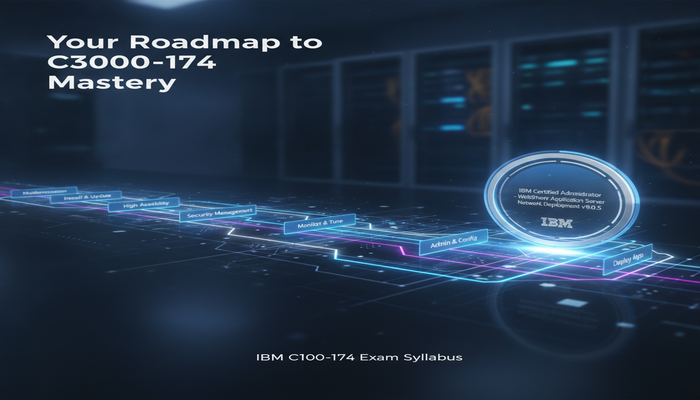
A digital roadmap showing the path to IBM C1000-174 certification, with glowing milestones for syllabus topics like installation, security, and high availability, leading to an IBM Certified Administrator badge. The bold text 'Your Roadmap to C1000-174 Mastery' is visible.

In the dynamic landscape of enterprise application management, mastering IBM WebSphere Application Server Network Deployment v9.0.5 is a highly sought-after skill. The cornerstone of validating this expertise is the IBM Certified Administrator - WebSphere Application Server Network Deployment v9.0.5 certification, specifically earned by passing the challenging IBM C1000-174 exam. This advanced guide reveals the proven strategies, essential resources, and in-depth insights required to not just pass, but ace your IBM WebSphere Admin exam.

As IT infrastructures grow more complex, the demand for skilled administrators who can effectively deploy, manage, and troubleshoot mission-critical applications on robust platforms like WebSphere remains consistently high. Achieving this certification demonstrates your proficiency in a critical enterprise technology, setting you apart in the competitive job market. We will delve into every aspect of the C1000-174 exam, from its core objectives and detailed syllabus to strategic preparation tips and the career benefits that await certified professionals.

What is the IBM C1000-174 Exam?

The IBM C1000-174 exam, officially known as the IBM WebSphere Application Server Network Deployment v9.0.5 Administrator exam, is designed to validate the skills and knowledge of an experienced administrator responsible for the day-to-day management of IBM WebSphere Application Server Network Deployment environments. This includes installation, configuration, security, monitoring, troubleshooting, and application deployment for version 9.0.5.

Exam Details and Overview

Understanding the structure of the IBM WebSphere Application Server Network Deployment v9.0.5 Administrator exam is your first step towards success. Here are the key facts:

  • Exam Name: IBM Certified Administrator - WebSphere Application Server Network Deployment v9.0.5
  • Exam Code: C1000-174
  • Exam Price: $200 (USD)
  • Duration: 90 minutes
  • Number of Questions: 60
  • Passing Score: 70%

The exam comprises multiple-choice questions that test your practical knowledge and theoretical understanding across a broad spectrum of WebSphere administration tasks. It is crucial to manage your time effectively during the exam, as 90 minutes for 60 questions allows approximately 1.5 minutes per question.

The Value of IBM WebSphere Certification

Earning the IBM Certified Administrator - WebSphere Application Server Network Deployment v9.0.5 credential signifies a high level of expertise in a vital enterprise technology. This certification can unlock numerous career opportunities and provide significant professional advantages:

  • Industry Recognition: IBM certifications are globally recognized and highly respected within the IT industry.
  • Enhanced Credibility: It validates your skills and competence to potential employers and clients.
  • Career Advancement: Certified professionals often qualify for more advanced roles and higher salaries. The demand for skilled computer and information technology professionals continues to grow, as detailed by the Bureau of Labor Statistics.
  • Deepened Knowledge: The preparation process itself solidifies your understanding of WebSphere Application Server Network Deployment v9.0.5 administration.
  • Competitive Edge: In a competitive job market, certifications provide a distinct advantage.

Who Should Pursue This Certification?

This IBM WebSphere Admin certification path is ideal for experienced system administrators, technical specialists, and IT professionals who are actively involved in the installation, configuration, and maintenance of IBM WebSphere Application Server Network Deployment v9.0.5 environments. Candidates should have practical experience working with the product and a solid understanding of its various components and functionalities. If you are aiming to validate your skills in managing enterprise-grade Java EE application environments, this exam is for you.

Comprehensive IBM C1000-174 Exam Syllabus Breakdown

A thorough understanding of the IBM C1000-174 exam syllabus is paramount for effective preparation. Each section of the exam covers specific areas of WebSphere administration, weighted by percentage. We will provide an in-depth look at each topic to guide your study efforts. For a more detailed IBM C1000-174 exam syllabus breakdown, you can refer to additional resources such as this page detailing exam topics.

Install and update the environment (13%)

This section tests your ability to prepare and set up the WebSphere environment. It covers critical aspects of initial deployment and ongoing maintenance:

  • Planning and preparing for installation, including system requirements and prerequisites.
  • Performing graphical and command-line installations of WebSphere Application Server Network Deployment v9.0.5.
  • Understanding and applying fix packs, interim fixes, and feature packs to update the environment.
  • Configuring profiles (standalone, federated, custom) and understanding their roles.
  • Managing product installations using Installation Manager.
  • Verifying successful installation and environment setup.

Create a high availability configuration (13%)

High availability is crucial for enterprise applications. This domain focuses on designing and implementing resilient WebSphere topologies:

  • Configuring WebSphere Application Server Network Deployment v9.0.5 clusters for workload management and failover.
  • Understanding and implementing different high availability strategies (e.g., vertical vs. horizontal scaling).
  • Configuring data source and message queue failover.
  • Setting up and managing session persistence (database, memory-to-memory replication).
  • Integrating with load balancers (e.g., IBM HTTP Server, other external load balancers) for request distribution.
  • Understanding the role of the Deployment Manager and Node Agents in a distributed environment.

Manage Security (12%)

Security is a non-negotiable aspect of any enterprise system. This section covers securing your WebSphere environment comprehensively:

  • Configuring and managing administrative security (e.g., global security, security domains).
  • Implementing user registries (federated repositories, LDAP, local OS).
  • Securing applications with Java EE security roles and authorization.
  • Configuring SSL/TLS for secure communication within the WebSphere topology and with external systems.
  • Managing security certificates and key stores.
  • Understanding and applying security hardening best practices for WebSphere Application Server ND v9.0.5.

Monitor and Tune the Environment (8%)

Optimizing performance and ensuring the health of the WebSphere environment is key to operational excellence. This topic assesses your skills in:

  • Utilizing the administrative console and command-line tools for monitoring performance metrics.
  • Configuring Performance Monitoring Infrastructure (PMI) and performance advisors.
  • Analyzing log files and server health.
  • Adjusting JVM settings (heap size, garbage collection policies) for optimal performance.
  • Tuning thread pools, connection pools, and other resource adapters.
  • Implementing custom performance monitoring solutions.

Troubleshoot Post-Installation (8%)

Even with careful planning, issues can arise. This section focuses on your ability to diagnose and resolve problems after installation:

  • Identifying and diagnosing common installation and configuration issues.
  • Analyzing logs (SystemOut, SystemErr, native_stdout, native_stderr, FFDC) to pinpoint problems.
  • Using tracing and diagnostic tools within WebSphere.
  • Troubleshooting application deployment and runtime errors.
  • Resolving connectivity issues (database, JMS, external services).
  • Understanding the process for gathering diagnostic information for IBM support.

Administer and Configure the environment (18%)

This is the largest section, covering the broad day-to-day administration and configuration tasks for WebSphere Application Server Network Deployment v9.0.5. Mastery of these IBM WebSphere Application Server Network Deployment v9.0.5 Administrator exam topics is crucial:

  • Managing server instances, Node Agents, and the Deployment Manager.
  • Configuring data sources and JDBC providers.
  • Setting up Java Message Service (JMS) resources (queues, topics, connection factories).
  • Configuring virtual hosts, aliases, and web containers.
  • Managing resource adapters and J2C authentication aliases.
  • Configuring environment variables and custom properties.
  • Using wsadmin scripting (Jython/Jacl) for automation and advanced configuration.
  • Understanding and managing shared libraries and class loaders.

Deploy and Administer Applications (15%)

A core function of WebSphere is hosting applications. This domain covers the lifecycle of application management:

  • Deploying Java EE applications (EAR, WAR, JAR files) through the administrative console and wsadmin.
  • Understanding application binding and mapping to servers/clusters.
  • Managing application lifecycles (start, stop, update, uninstall).
  • Configuring enterprise applications for specific resources and security.
  • Monitoring application performance and health.
  • Managing web server plugins for routing requests to WebSphere.

Modernization (13%)

WebSphere v9.0.5 includes features for integrating with modern development and deployment practices. This section covers topics related to:

  • Understanding the concept of Liberty profile and its advantages for cloud-native applications.
  • Migrating applications from traditional WebSphere to Liberty profile.
  • Integrating with containerization technologies like Docker and Kubernetes.
  • Utilizing microservices architectures with WebSphere.
  • Understanding how WebSphere fits into a hybrid cloud strategy.
  • Leveraging REST APIs for administration and automation.

Strategic Preparation for the IBM WebSphere Admin Exam

Passing the IBM C1000-174 exam requires more than just knowing the material; it demands a strategic approach to study and practice. This section provides detailed guidance on effective preparation methods, including recommended resources and study techniques to help you master the IBM WebSphere Application Server Network Deployment v9.0.5 Administrator study guide.

Official IBM Training and Resources

IBM offers a wealth of resources specifically designed to help candidates prepare for their certification exams. Leveraging these is crucial for understanding the official perspective and recommended practices.

  • Official Certification Page: Always start with the official IBM certification page for the C1000-174 exam. It provides the most accurate and up-to-date information regarding exam objectives, prerequisites, and recommended training.
  • IBM WebSphere Application Server V9 Training: IBM provides comprehensive training courses and learning paths. The official IBM WebSphere training paths are invaluable, offering structured learning modules that cover all exam objectives. These courses are often taught by IBM experts and include hands-on labs.
  • IBM Documentation: The official IBM Knowledge Center for WebSphere Application Server Network Deployment v9.0.5 is an exhaustive resource. Familiarize yourself with navigation and search functions, as you will likely refer to it frequently in your role as an administrator.

Practice Questions and Study Guides

Beyond official training, supplementing your study with high-quality practice materials is essential for the IBM WebSphere Admin exam. Look for C1000-174 practice questions that simulate the actual exam environment and content.

  • Reputable Practice Exams: Seek out practice exams that provide detailed explanations for both correct and incorrect answers. This helps reinforce your understanding of the underlying concepts.
  • Community Forums and Study Groups: Engaging with other candidates and certified professionals in online forums or study groups can provide different perspectives and help clarify complex topics.
  • Hands-on Labs: Practical experience is irreplaceable. Set up a local WebSphere v9.0.5 environment (even a trial version) and practice every single task mentioned in the syllabus. This includes installation, configuration of various components, deploying applications, and simulating troubleshooting scenarios.

Effective Study Techniques

To maximize your chances of success, adopt a multi-faceted approach to your study plan:

  • Create a Study Schedule: Allocate dedicated time each day or week for studying. Consistency is more important than cramming.
  • Focus on Weak Areas: Identify your knowledge gaps early on, particularly in areas with higher exam weighting, and devote extra time to mastering them.
  • Review Key Concepts: Regularly revisit fundamental WebSphere concepts, even those you feel confident about.
  • Flashcards and Summaries: Create flashcards for key definitions, commands, and configuration steps. Summarizing topics in your own words helps with retention.
  • Scenario-Based Learning: WebSphere administration often involves solving real-world problems. Think about how you would address different scenarios related to deployment, security, or performance issues.
  • Stay Updated: WebSphere, like any enterprise software, receives updates. While the exam focuses on v9.0.5, staying aware of major changes or new features can broaden your understanding.

Scheduling Your IBM C1000-174 Exam

Once you feel confident in your preparation, it's time to schedule your exam. IBM certifications are administered by Pearson VUE. You can visit the Pearson VUE website to find a testing center near you and book your C1000-174 exam slot. Be sure to review their policies regarding identification and test-taking procedures well in advance.

The Career Impact of IBM WebSphere Application Server Network Deployment v9.0.5 Certification

Achieving the IBM Certified Administrator - WebSphere Application Server Network Deployment v9.0.5 certification opens doors to specialized roles and greater responsibilities within organizations leveraging IBM technologies. It signifies that you possess critical IBM WebSphere Application Server ND v9.0.5 administrator skills that are in high demand.

Professionals holding this certification are typically sought after for roles such as:

  • WebSphere Administrator
  • Application Server Engineer
  • Middleware Specialist
  • DevOps Engineer (with a focus on application runtime environments)
  • IT Operations Analyst

The certification not only validates your technical prowess but also your commitment to continuous learning and professional development. This commitment is highly valued by employers looking for dedicated and skilled individuals to manage their critical application infrastructure. Understanding the benefits of IBM WebSphere Application Server Network Deployment v9.0.5 certification can motivate you through your study process. For more insights on the broader landscape of IT professional development, consider exploring latest IBM business insights.

Conclusion

The IBM C1000-174 exam is a rigorous test of your expertise in IBM WebSphere Application Server Network Deployment v9.0.5 administration, but with a structured approach and diligent preparation, achieving certification is well within your reach. By thoroughly understanding the exam objectives, utilizing official IBM resources, engaging in hands-on practice, and strategically reviewing your knowledge, you can confidently approach the exam.

This certification is more than just a piece of paper; it's a testament to your advanced skills, enhancing your career prospects and solidifying your position as an expert in enterprise middleware. Embrace the challenge, commit to the process, and soon you'll be among the elite IBM Certified Administrators. For a deeper dive into specific IBM technologies and their impact, you can always explore related IBM technology articles.

Frequently Asked Questions About the IBM WebSphere Admin Exam

1. What specific version of WebSphere Application Server Network Deployment does the C1000-174 exam cover?

The C1000-174 exam covers IBM WebSphere Application Server Network Deployment v9.0.5, focusing on its administration, configuration, and management features.

2. Are there any prerequisites for taking the IBM C1000-174 exam?

While IBM does not typically enforce strict prerequisites for taking most certification exams, it is highly recommended that candidates have practical experience with WebSphere Application Server Network Deployment v9.0.5, ideally 12-18 months, before attempting the IBM WebSphere Admin exam.

3. How can I find official IBM C1000-174 exam preparation tips and study materials?

Official preparation tips and study materials, including recommended training courses and documentation, can be found on the official IBM certification page for the C1000-174 exam and through IBM's training and learning paths portal.

4. What job roles typically benefit from the IBM Certified Administrator - WebSphere Application Server Network Deployment v9.0.5 certification?

Job roles such as WebSphere Administrator, Application Server Engineer, Middleware Specialist, and IT Operations Analyst greatly benefit from this certification, as it validates advanced skills in managing critical enterprise application environments.

5. What is the format of the C1000-174 exam, and how many questions are there?

The IBM C1000-174 exam consists of 60 multiple-choice questions, and candidates are given 90 minutes to complete the exam. A passing score of 70% is required.

Ready to Elevate Your Expertise?

The journey to becoming an IBM Certified Administrator - WebSphere Application Server Network Deployment v9.0.5 is a rewarding one. With the insights and guidance provided in this article, you are now equipped with the knowledge to formulate a robust study plan. Take the next step in your career and start preparing for your IBM WebSphere Admin exam today!