Showing posts with label Data Science. Show all posts

Thursday, 9 July 2026

Banish Exam Nerves: IBM watsonx Data Science Ready

A confident data scientist interacting with an advanced holographic display showing IBM watsonx.ai interface and organized data visualizations, with the title 'Conquer C1000-177: watsonx Data Science Ready' clearly visible on the image.

Are you gearing up to conquer the IBM C1000-177 exam? The prospect of any certification exam can be daunting, but with the right preparation and a confident mindset, you can truly banish those exam nerves. This comprehensive guide is designed to empower you, providing a clear path to success for the IBM Certified watsonx Data Scientist - Associate certification.

Becoming an IBM Certified watsonx Data Scientist - Associate demonstrates your foundational expertise in leveraging IBM watsonx for data science tasks. This isn't just another credential; it's a testament to your skills in a rapidly evolving field, signifying your readiness to tackle real-world data challenges using cutting-edge IBM technology. Let's delve into how you can approach the Foundations of Data Science using IBM watsonx exam with unwavering confidence.

Why Earn the IBM Certified watsonx Data Scientist - Associate Certification?

In today's data-driven world, skilled data scientists are in high demand. Companies across industries are looking for professionals who can extract meaningful insights, build predictive models, and drive innovation. The IBM watsonx platform offers a powerful suite of tools for data science, machine learning, and AI, making expertise in this area incredibly valuable.

Earning the IBM Certified watsonx Data Scientist - Associate certification validates your ability to navigate and utilize the core functionalities of IBM watsonx. This includes understanding fundamental data science concepts, working with various development tools, and performing essential tasks like data preparation and model evaluation. It's a stepping stone to advanced roles and a clear signal to employers that you possess a verified skill set in a leading enterprise AI and data platform.

The job outlook for data scientists and related roles continues to be strong. According to the U.S. Bureau of Labor Statistics, employment of computer and information research scientists is projected to grow much faster than the average for all occupations. Professionals with specialized skills in platforms like IBM watsonx are uniquely positioned to capitalize on this demand, showcasing their readiness to contribute to the future of AI and analytics. You can explore these trends further by visiting the Bureau of Labor Statistics occupational outlook for computer and information technology roles.

Understanding the IBM C1000-177 Exam: Foundations of Data Science using IBM watsonx

The IBM C1000-177 exam, officially known as Foundations of Data Science using IBM watsonx, is designed to assess a candidate's fundamental knowledge and practical skills required to work with data science concepts within the IBM watsonx environment. It's your opportunity to prove your grasp of essential data science methodologies and their application on a powerful platform.

Key Exam Details:

  • Exam Name: IBM Certified watsonx Data Scientist - Associate
  • Exam Code: C1000-177
  • Exam Price: $200 (USD)
  • Duration: 90 minutes
  • Number of Questions: 61
  • Passing Score: 70%

Achieving this certification demonstrates proficiency in core areas, from understanding business problems to deploying and evaluating models. A solid understanding of the IBM C1000-177 exam objectives is crucial for effective preparation. Many candidates find it helpful to review the detailed exam syllabus on the official certification page. For comprehensive details on the certification and what it entails, you can visit the IBM Certified watsonx Data Scientist - Associate official page.

To effectively prepare for this certification, a thorough review of the IBM C1000-177 exam syllabus is highly recommended. This will provide a structured approach to your study plan and help you allocate your time wisely across different topics.

Diving Deep into the IBM C1000-177 Exam Syllabus

Success in the IBM C1000-177 exam hinges on a deep understanding of its core domains. The exam is structured around five key areas, each contributing a specific percentage to your overall score. Let's break down each section to help you focus your Foundations of Data Science using IBM watsonx study guide efforts.

Evaluate the Business Problem (16%)

This section emphasizes the critical initial phase of any data science project: understanding the problem. You'll need to demonstrate your ability to:

  • Identify and define the business problem effectively.
  • Translate business objectives into measurable data science goals.
  • Understand the context and constraints of the problem.
  • Identify relevant stakeholders and their requirements.
  • Differentiate between various types of data science problems (e.g., classification, regression, clustering).
  • Assess the feasibility and potential impact of data science solutions on business outcomes.

Mastering this domain means you can lay a strong foundation for any project, ensuring that your data science efforts are aligned with real business value.

Perform Exploratory Data Analysis (21%)

Exploratory Data Analysis (EDA) is where you get to know your data. This significant portion of the IBM C1000-177 exam topics requires you to:

  • Describe and apply various statistical techniques to summarize data.
  • Utilize data visualization tools and techniques to uncover patterns, anomalies, and relationships.
  • Identify and handle missing values, outliers, and inconsistencies in datasets.
  • Understand different data types (e.g., numerical, categorical, ordinal) and their characteristics.
  • Formulate hypotheses based on initial data observations.
  • Assess data quality and determine its suitability for modeling.
  • Perform correlation analysis and understand multicollinearity.

Proficiency here means you can effectively inspect, clean, and understand a dataset, which is a cornerstone of robust IBM watsonx data science projects.

Development Tools and Techniques (13%)

This section focuses on the practical aspects of working within the IBM watsonx environment. It assesses your knowledge of:

  • Navigating the IBM watsonx platform and its components (e.g., watsonx.ai, watsonx.data, watsonx.governance).
  • Using notebooks (Jupyter, Python environments) for data manipulation and model development.
  • Leveraging popular data science libraries (e.g., Pandas, NumPy, Scikit-learn, Matplotlib).
  • Understanding data connectors and data ingress/egress within watsonx.
  • Collaborating on data science projects using version control principles.
  • Utilizing various development techniques for efficient workflow in IBM watsonx data science fundamentals.

Being comfortable with these tools is essential for implementing the theoretical concepts of data science within IBM's powerful ecosystem.

Pre-Processing and Feature Engineering (33%)

This is the largest section of the exam, underscoring its importance in practical data science. It covers the crucial steps of preparing your data for model training:

  • Implementing various data cleaning techniques (e.g., imputation, outlier removal).
  • Applying data transformation methods (e.g., scaling, normalization, logarithmic transformation).
  • Performing feature engineering techniques to create new, more informative features from raw data.
  • Understanding one-hot encoding, label encoding, and other categorical data handling methods.
  • Reducing dimensionality using techniques like PCA (Principal Component Analysis).
  • Handling imbalanced datasets effectively.
  • Preparing datasets for specific machine learning algorithms.
  • Understanding the impact of pre-processing choices on model performance.

A strong grasp of this domain is critical for building accurate and robust models, as the quality of your input data directly impacts the output.

Model Selection, Training, Evaluation, and Presentation (17%)

The final section brings together all previous stages, focusing on the core of machine learning. Your preparation for IBM C1000-177 exam objectives should include:

  • Selecting appropriate machine learning algorithms for different problem types (e.g., linear regression, logistic regression, decision trees, random forests, clustering algorithms).
  • Training models using prepared data.
  • Understanding hyperparameter tuning and optimization.
  • Evaluating model performance using relevant metrics (e.g., accuracy, precision, recall, F1-score, RMSE, ROC curves, silhouette score).
  • Interpreting model results and identifying potential biases.
  • Communicating model findings and insights effectively to stakeholders.
  • Basic understanding of model deployment considerations and MLOps within IBM watsonx machine learning capabilities.

This section ensures you can not only build models but also assess their effectiveness and convey their value. To deepen your understanding of these crucial concepts, consider exploring resources on how business leaders can leverage AI and data science for strategic advantage.

Effective Strategies for IBM watsonx Data Science Exam Preparation

Preparing for the IBM C1000-177 exam requires a structured approach. Here's how you can optimize your study time and build confidence for the Foundations of Data Science using IBM watsonx certification.

1. Master the Official Study Materials

IBM provides excellent resources to help you prepare. The official learning path, "IBM Certified watsonx Data Scientist - Associate," is an invaluable starting point. This structured training covers all the necessary topics in depth. You can find this essential resource here: IBM Certified watsonx Data Scientist - Associate Learning Path.

Dedicate time to understanding the core data science concepts in IBM watsonx as presented in these materials. Don't just skim through; actively engage with the content, take notes, and work through any exercises provided.

2. Hands-on Practice with IBM watsonx

Theoretical knowledge is crucial, but practical experience with the IBM watsonx data science platform features is equally vital. Set up a free trial or access a lab environment for watsonx.ai. Experiment with:

  • Loading and exploring datasets.
  • Performing data cleaning and pre-processing tasks.
  • Building and training simple machine learning models.
  • Evaluating model performance using different metrics.
  • Utilizing notebooks and other development tools within watsonx.

This hands-on experience will solidify your understanding and make the exam questions more intuitive.

3. Leverage Practice Questions and Mock Exams

One of the best ways to prepare for the IBM C1000-177 practice questions. Practice questions help you:

  • Familiarize yourself with the exam format and question types.
  • Identify areas where your knowledge might be weak.
  • Improve your time management skills.
  • Build confidence by successfully answering questions.

Look for reliable sources of IBM C1000-177 sample questions. While no practice exam perfectly replicates the real thing, they are excellent tools for gauging your readiness.

4. Create a Study Schedule

Given the breadth of the syllabus, a well-structured study plan is essential. Break down the Foundations of Data Science using IBM watsonx exam topics into manageable chunks. Allocate specific times each week for studying each domain, ensuring you spend extra time on the more heavily weighted sections like 'Pre-Processing and Feature Engineering'.

5. Join Study Groups or Forums

Connecting with other individuals preparing for the IBM Certified watsonx Data Scientist - Associate preparation can be incredibly beneficial. You can share insights, ask questions, and even explain concepts to others, which is a powerful way to reinforce your own learning. Online forums or professional communities often have discussions around 'how to prepare for IBM C1000-177 exam'.

Mastering the Foundations of Data Science using IBM watsonx

Beyond memorizing facts, true mastery comes from understanding the underlying principles. The IBM watsonx data science certification path requires you to not only know *what* to do but also *why* you are doing it.

Core Data Science Concepts in IBM watsonx

  • Statistical Thinking: Understand distributions, hypothesis testing, and statistical significance. This underpins effective EDA and model interpretation.
  • Machine Learning Fundamentals: Grasp supervised vs. unsupervised learning, classification vs. regression, and the basic principles behind common algorithms.
  • Data Governance and Ethics: While not a primary focus for this associate-level exam, having an awareness of data privacy, bias in AI, and responsible AI practices is increasingly important in any data science role, especially within a platform like watsonx.
  • Cloud Integration: Understand how IBM watsonx integrates with cloud services, as this is a cloud-native platform.

The IBM C1000-177 exam syllabus covers a wide range of topics that require both theoretical knowledge and practical application. Focus on connecting the dots between different concepts and how they apply in the context of IBM watsonx.

Leveraging IBM watsonx Data Science Platform Features

IBM watsonx is a comprehensive platform designed to accelerate AI and data initiatives. Familiarity with its key features will not only help you pass the exam but also excel in your data science career.

  • watsonx.ai: This is the core studio for building, training, validating, and deploying generative AI, foundation models, and machine learning models. Understand its interface, model building capabilities, and asset management.
  • watsonx.data: A fit-for-purpose data store that enables open, hybrid, and governed data access for AI workloads. While C1000-177 is foundational, understanding its role in providing data to watsonx.ai is beneficial.
  • watsonx.governance: Focuses on responsible AI, helping to automate governance, risk, and compliance workflows. Awareness of its purpose helps understand the complete lifecycle of AI projects.
  • Foundation Models: Gain a basic understanding of what foundation models are and how they are leveraged within watsonx.ai for various tasks.
  • Data Refinery: A powerful tool within watsonx.ai for interactively shaping, cleansing, and transforming data. This directly ties into the 'Pre-Processing and Feature Engineering' section of the exam.
  • AutoAI: IBM watsonx machine learning capabilities include AutoAI, which automates the process of data preparation, model selection, and hyperparameter optimization, allowing data scientists to build and deploy high-performing models faster.

These features are what make the IBM watsonx data science experience so powerful and are crucial to grasp for comprehensive exam readiness.

Before Exam Day: Final Prep and Mindset

As your exam day approaches, it's natural to feel a mix of excitement and apprehension. Here are some final tips to ensure you are psychologically and logistically ready.

Review and Reinforce

In the final days, focus on reviewing your notes, re-doing challenging practice questions, and revisiting areas where you previously struggled. Don't try to cram new information. Instead, reinforce what you've already learned. Pay particular attention to the 'Pre-Processing and Feature Engineering' syllabus topic, as it carries the highest weight.

Simulate Exam Conditions

If you have access to a full-length IBM C1000-177 practice questions, take it under timed conditions. This will help you manage your time effectively during the actual exam and reduce surprises. Understand the IBM C1000-177 passing score and aim to consistently exceed it in your practice runs.

Prioritize Rest and Nutrition

A well-rested mind performs best. Get adequate sleep the night before the exam. Eat a healthy meal, stay hydrated, and avoid excessive caffeine. Physical well-being directly impacts mental clarity and focus.

Manage Exam Nerves

It's okay to be nervous, but don't let it overwhelm you. Practice deep breathing exercises. Remind yourself of all the hard work you've put in. You've prepared diligently, and you're ready. Trust your knowledge and abilities.

Logistics for Exam Day

Confirm your exam appointment details, including the location (if in-person) or virtual exam requirements. Arrive early or log in well in advance to avoid last-minute stress. Make sure you have the required identification. You can schedule your exam through Pearson VUE.

Frequently Asked Questions About the IBM C1000-177 Exam

1. What is the scope of the IBM C1000-177 exam?

The IBM C1000-177 exam, Foundations of Data Science using IBM watsonx, covers foundational data science concepts and their application within the IBM watsonx platform, including business problem evaluation, EDA, development tools, pre-processing, feature engineering, and model handling.

2. Is prior experience with IBM watsonx required for the certification?

While the certification is associate-level, hands-on experience with the IBM watsonx platform, especially watsonx.ai, is highly recommended. The exam assesses practical application, so familiarity with the environment and its tools is crucial.

3. How long does it typically take to prepare for the IBM C1000-177 exam?

Preparation time varies depending on your existing knowledge of data science and familiarity with IBM watsonx. Following the official learning path and dedicating consistent study hours, most candidates can prepare within a few weeks to a couple of months.

4. What resources are most helpful for IBM C1000-177 preparation?

The most helpful resources include the official IBM learning path, hands-on labs with IBM watsonx.ai, practice questions, and a thorough review of the IBM C1000-177 exam syllabus to ensure all topics are covered.

5. What is the IBM C1000-177 exam cost and passing score?

The IBM C1000-177 exam cost is $200 (USD), and the passing score is 70%. It consists of 61 multiple-choice questions to be completed within 90 minutes.

Conclusion

Banish those exam nerves for good! You are now equipped with a comprehensive understanding of what it takes to succeed in the IBM C1000-177 exam and become an IBM Certified watsonx Data Scientist - Associate. Your journey to mastering IBM watsonx data science is a rewarding one, opening doors to exciting career opportunities in the world of AI and analytics.

Remember, diligent study, hands-on practice, and a confident mindset are your greatest assets. Trust in your preparation, leverage the official resources, and approach the exam with the assurance that you have done the work. The benefits of IBM Certified watsonx Data Scientist certification extend far beyond the exam room, enhancing your professional profile and equipping you with highly sought-after skills.

Are you ready to elevate your data science skills and demonstrate your expertise? Take the next step towards becoming an IBM Certified watsonx Data Scientist - Associate. Explore other insights into the IBM ecosystem, such as examples of IBM assisting insurance companies, to see the broader impact of IBM's technologies.


Thursday, 9 March 2023

Innocens BV leverages IBM Technology to Develop an AI Solution to help detect potential sepsis events in high-risk newborns

IBM, IBM Exam, IBM Exam Prep, IBM Exam Preparation, IBM Career, IBM Skills, IBM Jobs, IBM Guides, IBM Learning

From the moment of birth to discharge, healthcare professionals can collect so much data about an infant’s vitals—for instance, heartbeat frequency or every rise and drop in blood oxygen level. Although medicine continues to advance further, there’s still much to be done to help reduce the number of premature births and infant mortality. The worldwide statistics on premature births are staggering— the University of Oxford estimates that neonatal sepsis causes 2.5 million infant deaths annually.

Babies born prematurely are susceptible to health problems. Sepsis or bloodstream infection is life threatening and a common complication when admitted in a Neonatal Intensive Care Unit (NICU).

At Innocens BV, the belief is that earlier identification of sepsis-related events in newborns is possible, especially given the vast amount of data points collected from the moment a baby is born. Years’ worth of aggregated data in the NICU could help lead us to a solution. The challenge was gleaning relevant insights from the vast amount of data collected to help identify those infants at risk. This mission is how Innocens BV began in the Neonatal Intensive Care Unit (NICU) at Antwerp University Hospital in Antwerp, Belgium in cooperation with the University of Antwerp. The NICU at the hospital is associated closely with the University , and its focus is on improving care for premature and low birthweight infants. We joined forces with a Bio-informatics research group from the University of Antwerp and started taking the first steps in developing a solution.

Using IBM’s technology and the expertise of their data scientists along with the knowledge and insights from the hospital’s NICU medical team, we kicked off a project to further develop the ideas into a solution that was aimed at using clinical signals that are routinely collected in clinical care to aid doctors with the timely detection of patterns in such data that are associated with a sepsis episode. The specific approach we took required the use of both AI and edge computing to create a predictive model that could process years of anonymized data to help doctors make informed decisions. We wanted to be able to help them observe and monitor the thousands of data points available to make informed decisions.

How AI powers the Innocens Project


When the collaboration began, data scientists at IBM understood they were dealing with a sensitive topic and sensitive information. The Innocens team needed to build a model that could detect subtle changes in neonates’ vital signs while generating as few false alarms as possible. This required a model with a high level of precision that also is built upon  key principles of trustworthy AI including transparency, explainability, fairness, privacy and robustness.

Using IBM Watson Studio, a service available on IBM Cloud Pak for Data, to train and monitor the AI solution’s machine learning models, Innocens BV could help doctors by providing data driven insights that are associated with a potential onset of sepsis. Early results on historical data show that many severe sepsis cases can be identified multiple hours in advance. The user interface providing the output of the predictive AI model is designed to help provide doctors and other medical personel with insights on individual patients and to augment their clinical intuition.

Innocens worked closely with IBM and medical personel at the Antwerp University Hospital to develop a purposeful platform with a user interface that is consistent and easy to navigate and uses a comprehensible AI model with explainable AI capabilities. With the doctors and nurses in mind, the team aimed to create a model that would allow the intended users to reap its benefits. This work was imperative for building trust between the users and the instruments that would help inform a clinician’s diagnosis. Innocens also involved doctors in the development process of building the user interface and respected the privacy and confidentiality of the anonymous historical patient data used to train the model within a robust data architecture.

The technology and outcomes of this research project could have the potential to not only help the patients at Antwerp University Hospital, but to scale for different NICU centers and help other hospitals as they work to combat neonatal sepsis. Innocens BV is working in collaboration with IBM to explore how Innocens can continue to leverage data to help train transparent and explainable AI models capable of finding patterns in patient data, providing doctors with additional data insights and tools that help inform clinical decision-making.

The impact of the Innocens technology is being investigated in clinical trials and is not yet commercially available.

Source: ibm.com

Sunday, 6 March 2022

IBM teams up with organizations on AI incubator for social impact

IBM Exam Study, IBM Exam Preparation, IBM Career, IBM Tutorial and Materials, IBM Study, IBM Skills, IBM Jobs

As social impact organizations accelerate digitization, they are increasingly aware of the untapped potential lying within their data, and how AI solutions leveraging this data can amplify impact. With ethical guardrails as a core consideration, pioneering organizations are blazing the trail for AI for social impact across the globe.

The IBM Data Science and AI Elite (DSE) Team spearheaded an incubator to facilitate exploration and use of AI for social impact organizations.  Social impact organizations worked alongside IBM DSE and IBM Research experts, supported by IBM Volunteers through the Academy of Technology. The incubator included direct product feedback that informs IBM’s approach to developing products that are relevant to diverse audiences in an effort to narrow the data divide.

Four organizations hand-picked

Amongst a competitive applicant pool, the team selected four organizations:

◉ Center for Court Innovation (CCI) and Alabama Appleseed teamed with IBM to analyze social disparities in the criminal system of the state of Alabama using AI and Data Science tools. CCI is a non-profit organization focused on creating operating programs to test new ideas, solve problems, and provide expert assistance to justice reformers around the world. Alabama Appleseed is a public policy and direct service organization based in Montgomery and Birmingham that uses policy analysis, original research, public education, and community organizing to build a more just and equitable Alabama. Using Watson Studio and the AI Fairness 360 toolkit, IBM data scientists analyzed court debt data to identify factors that have a detrimental impact on people’s lives and use its outcomes to potentially impact relevant state-wide policies. The models identified the most vulnerable sub-populations facing disproportionate consequences in the criminal system and have enabled research scientists from CCI and Alabama Appleseed to continue to study fairness at the individual and population level.

“At a time when AI is rarely used within non-profit and governmental sectors, collaborating with the team on an AI project was eye opening,” said Andrew Martinez, Principal Research Scientist with the Center for Court Innovation, “I walk away inspired to continue to explore ways to leverage AI capabilities into our work. “

◉ Greater DC Diaper Bank (GDCDB) is the largest diaper bank in the DC Metro region. It works with over 70 social service organizations to distribute over 700,000 diapers and other essential hygiene products to low-income families each month. GDCDB combined their own geo-based data on diaper distribution with external data related to various indicators of need and support to create a more comprehensive and hyper-local understanding of diaper need by zip code in the DC Metro Area. To attain data-driven insights, GDCDB worked with IBM to analyze the data, estimate need, and create an interactive map to visualize potential need. The team used machine learning to identify groups of communities that experience similar challenges and where similar approaches to diaper distribution might work. The tool may also eventually allow GDCDB staff to proactively predict future diaper need in specific areas in order to better serve families and work with community leaders to collectively end diaper need in the DC region, using Watson Studio, IBM Cognos, and IBM SPSS Modeler Flows.

“For years we’ve been talking about leveraging public data to help us better identify diaper need in the region, and to also help us identify solutions for how to best meet that need,” said Carrie Fassett, Director of Partnerships and Impact at GDCDB “The IBM incubator helped make that vision a reality for us.” 

◉ Neighborhood Trust Financial Partners is a financial services innovator that creates financial security for low-wage workers through workplace and marketplace solutions. IBM and Neighborhood Trust teams collaborated to explore and analyze data to derive insights and build a machine learning pipeline to understand the relationship between users’ financial characteristics (such as bank transactions and credit reports) and their probability of experiencing financial distress. The team prioritized transparency to explain the impact of features on user’s likelihood of being in financial distress. Part of the solution relied around the application of a novel segmentation algorithm called ProtoDash, which allowed the team to identify “prototypical users”, or users that are the most representative of Neighborhood Trusts’ user base. The team used Watson Studio, AutoAI, and the AI Explainability 360 toolkit during their engagement.

Leo Rayfiel, Associate Director of Data & Analytics at Neighborhood Trust Financial Partners, detailed his experience, “Our collaboration with IBM significantly upgraded our organization’s ability to conduct advanced analytics projects. We finished our project with strong deliverables as well as a set of clearly explained and easy-to-use tools that will enable us to independently iterate on the work.”

Ready, set, build

The incubator featured a launch program with educational sessions including talks from partners including Change Machine and Urban Institute, along with several executive speakers who shared best practices for application of data science and AI. The organizations then began incubation projects alongside the DSE team, building models and data capacity alike. The cohort had the benefit of learning not only from their project experience throughout the program, but also from each other’s experiences.

Aakanksha Joshi, Lead Data Scientist, IBM DSE shares “It is an incredible experience to work with organizations in the non-profit sector, each with their own unique set of data and AI challenges. The organizations came together to share lessons learned across data acquisition, data selection, data preprocessing, and application of concepts like fairness, explainability and agility in the data science and machine learning lifecycle.”

Discover how other organizations are using IBM Cloud Pak® for Data to drive impact in their business and the world.

Source: ibm.com

Thursday, 27 January 2022

How data science can solve Telco’s energy problem

IBM Exam, IBM Exam Prep, IBM Exam Preparation, IBM Career, IBM Skills, IBM Jobs, IBM Certification, IBM Guides

The following are two major topics in the minds of CxOs of any Telco operator:

◉ 5G: Accelerating 5G to give a better experience to the customer and the possibility of increased revenue growth/market share.

◉ Energy management: Worrying about the carbon emissions and energy consumption — not only incurring costs for the latter but also the resulting additional costs for carbon offsets.

According to McKinsey, energy costs look set to increase further and may account for as much as 5-7% of operating expenditures.

With more advancement in technology for sustainability and green energy, one can reduce energy consumption by using infrastructure that is been designed to require less energy. However, for already deployed infrastructure — especially for older technologies like 3G and 4G — this may not be an ROI-viable approach.

For towers already installed and in use, the viable option is to find means to reduce the energy consumed by these towers. Luckily, these Telco systems have a built-in feature precisely for this challenge. Nokia calls it “Power Savings Mode,” and Ericsson calls it “Cell Sleep Mode” (CSM).

Conceptually, both are the same. The idea is rooted in power consumption remaining the same regardless of the utilization of the various layers (for the most part). These power-saving features make use of this fact and program the cell layers to sleep when the utilization is low, resulting in energy savings.

One downside to this approach is that when this is done at the wrong time or in unfavourable conditions, it may have an impact on the customer experience. For instance, customers streaming HD videos might experience a slow response or buffering, which may then affect their viewing experience. One option to counteract this is by setting the thresholds very low so that the chances of impacting the customer experience will be less likely, but the downside to this approach is the lost opportunity in power savings. On the other hand, setting the thresholds higher means more cell layers will be put to sleep for a longer period of time, potentially impacting the customer experience.

The ideal solution is to enable the sleep mode for these layers when the utilization is low and the impact on the customer experience won’t be noticeable, and this requires knowing the utilization and other conditions of these towers in advance. In other words, the challenge is to determine the utilization of each cell layer for the next few weeks at a very granular interval and, most importantly, to determine the impact on customer experience for the same period at similar granularity.

Applying this strategy to a customer project

The Data Science and AI Elite team had an opportunity to work with a large telecom operator who was keen on applying machine learning to reduce cell tower energy consumption with minimal impact on their customers’ experience. Their current approach of manually setting thresholds was not scaling given the dynamic change in lifestyle and work behavior of their customers (especially as more people were working from home over the last two years).

For instance, cell towers in the Central Business District areas were underutilized while people were working from home, while network utilization in residential areas remained relatively high late into the night as behavioral patterns were changing. These changes meant that existing power optimization thresholds were not effective and had to be updated.

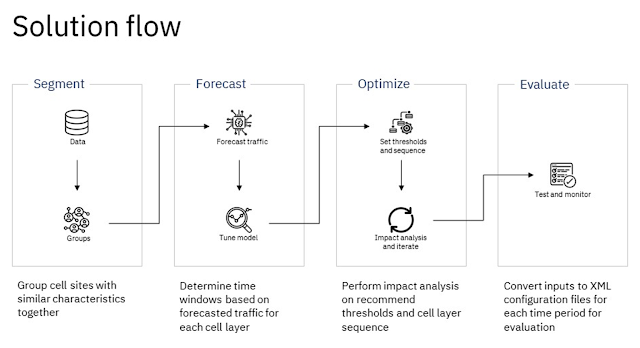
Our solution consisted of two key components:

◉ A network traffic forecast model

◉ An optimization model

One key challenge was quantifying customer impact and establishing a common scale between cost savings (in dollar value) and impact on customer experience.

IBM Exam, IBM Exam Prep, IBM Exam Preparation, IBM Career, IBM Skills, IBM Jobs, IBM Certification, IBM Guides
Figure 1: End-to-end pipeline for forecasting and optimization.

Other challenges we faced included the following:

◉ Extreme difficulty in monitoring customer impact because there were many factors involved, including the device used and the number of carrier aggregation, the surrounding devices connected to the cell tower, how the cell layers are configured, etc.
◉ A highly subjective and debatable correlation of dollar value to customer experience.
The solution to the challenge will be unique to each telecom operator and will largely depend on the type of monitoring tools they have and their acceptance of the quantification of customer impact.

The first component is the forecasting model, which forecasts the network utilization for each cell layer at an hourly interval. This forecast provides the optimization model with an idea of what the traffic looks like so optimal decisions can be made.

The second component is the optimization model, which determines the schedule on which cell layers should be put to sleep and at which hour. The objective function is to minimize the number of operating cell hours subjected to various constraints. These could be business constraints (e.g., having at least two coverage cell layers always switched on) or technical constraints (e.g., the average sector load cannot exceed 60%).

A differentiating factor in this solution is the consideration of customer impact when cell layers are switched off. The key idea is to find the optimal balance between cost savings and customer impact. Each telecom operator will have their own preferred way of approximating customer impact, and this is usually the most challenging part.

In our case, we used throughput volume from non-carrier aggregated connected devices. This allowed us to approximate the impact when a cell layer is switched off, as that device is only connected to that cell layer. This is an extremely important piece of information because it gives us an idea of the type of activity in which the user is engaged; for example, there is a difference between one device consuming 5GB of data volume or five devices consuming 1GB each of data volume.

RAN power savings using data science


Cell Sleep Mode overview


Cell Sleep Mode (CSM) has various parameters that govern the schedule of the cell. One set of key parameters is the sleep threshold and wakeup threshold. As their name suggests, the sleep threshold decides when the cell layer should be put to sleep, and the wakeup threshold decides when the cell layer should be woken up. When the cell sleep mode is enabled for a cell layer, all these parameters decide the state of that cell layer.

Segmentation


Telcos literally have tens of thousands of cell layers. Developing a forecasting model for each cell layer would simply result in too many models and is untenable. The clustering of cell layers based on utilization and the development of a forecasting model for each segment will reduce the number of forecasting models.

In addition, custom similarity metrics could also be applied to group more heterogeneous cell layers together. For example, instead of using the typical Euclidean distance, additional terms could be added to compare the direction of change so that cell layers with similar trends are grouped.

Forecasting


The forecasting model must predict the PRB utilization for each cell layer for the next couple of weeks on an hourly basis. This forecasted PRB utilization of each cell layer is one of the key inputs to the Decision Optimization model. So, it is imperative to build a highly accurate forecasting model.

Time series forecasting is a standard technique. There are many techniques to choose from, including traditional statistical types (e.g., ARIMA), machine learning types (e.g., xgboost) and deep learning types (e.g., NBEATS). Any of these will work; the main difference will most likely be the accuracy, and this will depend on the type of time series pattern the cell layer network utilization is exhibiting.

With the historical PRB utilization data segmented, we built an ensemble of forecasting models. Some of the key exogenous features that were included in the model were a list of holidays and COVID severity (count of active cases).

The forecasting model could further be enriched by including other features like network change information, marketing campaign information, network outage/service information, major events, etc.,

This fine-grained forecasted PRB utilization data is one of the key inputs to Decision Optimization model. The forecasted PRB data can be used as incremental information to guide adjacent business functions, such as preventive maintenance scheduling, capacity upgrades to towers, energy invoice reconciliation and more.

Customer impact analysis


Approximating customer impact when a cell layer is switched off is the most challenging aspect of this project. First, different telecom providers have different definitions of customer impact. Second, it is extremely difficult to quantify and measure the impact due to many changing factors like time of day or number of devices connected.

After several rounds of discussion, we decided to use non-carrier aggregated volume as a proxy to quantify the impact of a cell layer when it is put to sleep. The key idea is based on the idea that if earlier power-savings trials are running well and there are no complaints, we can infer the maximum non-carrier aggregated volume that is acceptable based on the current power-savings thresholds. At a high level, this can be accomplished in three steps:

1. Calculate average sector load for each hour across a specific period.
2. Select those time periods where sector load is below a specific threshold.
3. Use the maximum volume for these time periods to achieve the maximum acceptable impact loss.

The maximum acceptable impact loss in megabytes could then be a constraint for that specific cell layer and hour.

Decision Optimization model


The final step is to use the forecasted network traffic as an input along with operation requirements and customer impact as constraints to formulate the optimization model to generate a schedule to put cell layers to sleep. The objective function of the optimization model is to minimize the number of cell layer operating hours subjected to various constraints, such as the following:

◉ Limit each cell layer to a maximum of 80% utilization.
◉ Ensure that at least one base cell layer is always switched on.
◉ Ensure total forecasted network traffic is met by cell layers.
◉ Ensure non-carrier aggregated volume does not exceed the threshold.

In addition, the model needs to handle how the network traffic will be distributed when a cell layer is switched off. As there are many factors involved — such as the number of devices connected and the type of activities — we have used a conservative approach of assuming the entire load for the cell layer is replicated to the other cell layers. This ensures that the cell site will be to handle the additional load when cell layers are put to sleep.

With these inputs to the model, the output will be a schedule for each cell layer at an hourly level that decides if it should be put to sleep mode or not.

Evaluation


IBM Exam, IBM Exam Prep, IBM Exam Preparation, IBM Career, IBM Skills, IBM Jobs, IBM Certification, IBM Guides
Figure 2: Trial results.

A field trial of our models was conducted on a restricted number of cell sites. The purpose of the field trial was to measure estimated cost savings. The result seemed very promising, where both the forecasting model and Decision Optimization model had great results. That resulted in an estimated cost savings of about 15-25%, and the customer experience impact remained low. There is a possibility of achieving higher cost savings with a slightly more customer experience impact.

Source: ibm.com

Thursday, 25 November 2021

Retain clients with Trustworthy AI in wealth management

IBM Exam Study, IBM, IBM Exam, IBM Exam Prep, IBM Exam Preparation, IBM Tutorial and Materials, IBM Guides, IBM Certification, IBM Career

2021 sees the need for an acceleration in the transformation of wealth management IT systems. A study from Ernst and Young in 2019 showed that a third of clients plan to switch wealth management providers over the next three years. Insufficient personal attention and advisory capabilities were cited as the main reasons for customers leaving.

The traditional wealth advisor relationship must be considered, and growth in self-service tools will be required to support the newer investment channels. Smarter tools are vital for wealth management companies to enable advisors to create a better service for their clients. Such tools are likely to involve the use of AI and machine learning techniques to maximize information around customer needs, behaviours and data to hyperpersonalize, reinvent the market, and enable investments to fit individual customer circumstances.

Modernisation Pitfalls

Historically, attempts to modernize applications have often failed for wealth management companies. Let’s take a closer look at three main pitfalls which have hindered success along with our recommendations on how to best mitigate these risks:

No user-centric approach for AI

Acceptance of new systems by advisors and customers have failed because systems may not be designed around end user needs. Consequently, AI solutions often fail to create understandable and trustworthy personalization for the customers or the advisor. This results in a lack of confidence in the financial advisor and causes customers to look elsewhere and advisors to fall back on their traditional approach of using their own experience.

Technical challenges with AI applications

Infusing AI into wealth management systems presents many technical implementation challenges. Bespoke solutions are often too cumbersome, difficult to understand, not repeatable and have resulted in higher IT costs and time to implement changes. This is a major barrier to digital modernization, and the inclusion of explainable and usable AI.

Lack of end-to-end AI strategy

Getting value out of AI is not easy. According to MIT Sloan, 40% of organizations making significant investments in AI do not report business gain. Often, companies focus too much on the Data Scientists and clever algorithms in the belief that this alone will bring success, rather than looking at the full end to end process which would deliver the true outcomes they require. Whilst Wealth management organizations have long understood that AI is an essential, they have not followed a proper AI framework.

Tactics to win with AI Best Practices

To combat a lack of trust and confidence in AI, agile methods such as IBM Design Thinking aim to center your focus on user needs. Such methods involve multiple brainstorming sessions at the beginning of the project with client advisors and customers to align AI to the main pain points and system desires for end users.

Prototyping and iterating on these ideas should follow before formulating solutions. When it comes to customer attrition, clients need a smarter system to help prioritize which customers needed attention, and immediate notification when a customer is at high risk of leaving. To truly embrace AI, advisors want a smarter system they can trust – a system which produces AI output they can explain and understand.

The Data Science and AI Elite (DSE) developed machine learning models which identify and provide insight to customers who are at risk for attrition.  Design Thinking helps validate which functionality is most relevant and to address the issues of operational acceptance.

Rather than adopting bespoke, non-repeatable deployment approaches for AI based applications, IBM Cloud Pak for Data addresses challenges by offering a single platform to deploy all AI applications. It offers a wide range of services, including AutoAI to automate the model building approach and Watson Studio to allow for ethical and explainable AI.

IBM Exam Study, IBM, IBM Exam, IBM Exam Prep, IBM Exam Preparation, IBM Tutorial and Materials, IBM Guides, IBM Certification, IBM Career

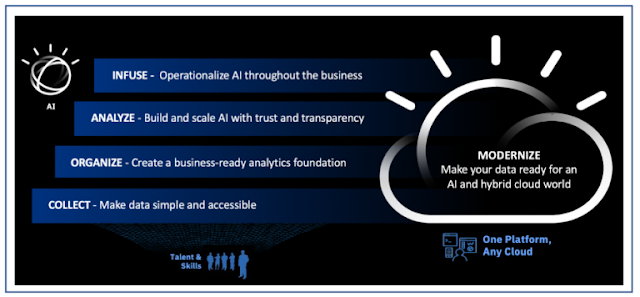
The AI Ladder (Figure 1) provides organizations with an understanding of where they are in their AI journey as well as a framework for helping them determine where they need to focus by providing four key areas to consider: how they collect data, organize data, analyze data, and then ultimately infuse AI into their organization.  IBM Cloud Pak for Data standardizes these processes to make AI operational to deliver business outcomes.

Transform your retention strategy to achieve Trustworthy AI:

◉ Use an agile approach to better understand customer’s and user needs, such as IBM Design Thinking

◉ Embrace the AI Ladder for adoption of an end-to-end process for delivering AI applications

◉ Reduce complexity and increase repeatable AI processes by deploying applications on IBM Cloud Pak for Data

Fast-track your journey to AI with IBM Industry Accelerators


Industry Accelerators on IBM Cloud Pak for Data provide tools to help you shorten time-to-value from demonstration to implementation. Learn how these accelerators can help you expedite your business strategy by exploring the new Accelerator Catalog.

For help getting started on your data science project, let our experts assist you. The IBM Data Science and AI Elite (DSE) team works side by side with your team to co-engineer AI solutions and help your business prove value at no cost. Get the skills, methods and tools you need to overcome AI adoption and to solve your business challenges quickly.

Source: ibm.com

Tuesday, 6 April 2021

IBM Quantum systems accelerate discoveries in science

IBM Exam Prep, IBM Preparation, IBM Learning, IBM Career, IBM Tutorial and Material, IBM Learning

Today, computation is central to the way we carry out the scientific method. High-performance computing resources help researchers generate hypotheses, find patterns in large datasets, perform statistical analyses, and even run experiments faster than ever before. Logically, access to a completely different computational paradigm — one with the potential to perform calculations intractable for any classical computer — could open up an entirely new realm for scientific discovery.

As quantum computers extend our computational capabilities, so too do we expect them to extend our ability to push science forward. In fact, access to today’s limited quantum computers has already provided benefits to researchers worldwide, offering an unprecedented look at the inner workings of the laws that govern how nature works, as well as a new lens through which to approach problems in chemistry, simulation, optimization, artificial intelligence, and other fields.

Here, we demonstrate the utility of IBM Quantum hardware as a tool to accelerate discoveries across scientific research, as shown at the American Physical Society’s March Meeting 2021. The APS March Meeting is the world’s largest physics conference, where researchers present their latest results to their peers and to the wider physics community. As a leading provider of quantum computing hardware, IBM’s quantum systems powered 46 non-IBM presentations in order to help discover new algorithms, simulate condensed matter and many-body systems, explore the frontiers of quantum mechanics and particle physics, and push the field of quantum information science forward overall. With this year’s APS March Meeting in mind, we believe that research access to quantum hardware — both on-site and via the cloud — will become a core driver for exploration and discovery in the field of physics in the coming years.

IBM’s quantum systems powered 46 non-IBM presentations in order to help discover new algorithms, simulate condensed matter and many-body systems, explore the frontiers of quantum mechanics and particle physics, and push the field of quantum information science forward overall.

IBM Quantum systems

At IBM Quantum, we build universal quantum computing systems for scientists, engineers, developers, and businesses. Our initiative operates a fleet of over two dozen full-stack quantum computing systems ranging from 1 to 65 qubits based on the transmon superconducting qubit architecture. These systems incorporate state of the art control electronics and a continually evolving software in order to offer the best-performing quantum computing services in the world. Our team released our development roadmap, demonstrating how we plan not only to scale processors up, but how to turn these devices into transformative computational tools.

IBM offers access to its quantum computing systems through several avenues. Our flagship program is our IBM Quantum Network, including our hubs, which collaborate with IBM on advancing quantum computing research, our industry partners, who explore a broad set of potential applications, and our members, who seek to build their general knowledge of quantum computing. At the broadest level, members of our community use the IBM Quantum Composer and IBM Quantum Lab programming tools, as well as the Qiskit open source software development kit to build and visualize quantum circuits and run quantum experiments on a dozen smaller devices. Researchers can also receive priority system access through our IBM Quantum Researchers Program.

Through the Network, the Researchers Program, and the quantum programming tools available to the broader community, IBM offers a range of support in order to facilitate the research and discovery process. This includes, but is not limited to, direct collaboration with our quantum researchers on projects, consultation on potential topic-specific use cases, and fostering the open source community passionate to advance the field of quantum computation.

Developing an ecosystem around cloud-based quantum access

As quantum computers mature, their physical requirements will necessitate that most users remotely access them and can program them in a frictionless way — that is, reap their benefits without needing to be a quantum mechanics expert. Quantum computing outfits across the industry are developing quantum systems in anticipation of this developing ecosystem. Access to these cloud-based computers will be of chief importance to three key developer segments: quantum kernel developers, seeking to understand quantum computers and their underlying mechanics to the level of logic circuits; quantum algorithm developers, employing these circuits to find potential advantages over existing classical computing algorithms and to push the limits of computing overall, and model developers, who apply these algorithms to perform research on real-world use cases in fields like physics, chemistry, optimization, machine learning, and others.

While IBM is developing our own ecosystem through accessible services on the IBM Cloud, we think that quantum access is important beyond our own communities. We’ve developed Qiskit to run application modules on any quantum computing platform, even other architectures such as trapped-ion devices. Ultimately, our goal is to democratize access to quantum computing, while providing the best hardware and expertise to all of those who hope to do research with and on our devices.

Using quantum computers for discovery, today

The multitude of presentations leveraging IBM Quantum at the APS March Meeting demonstrate not only adoption of IBM’s quantum computers as a platform for research by institutions outside of IBM, but more importantly, that the ability to access and run programs on these devices via the cloud is already advancing science and research today. Experiments on our systems spanned each of our projected developer segments, from kernel developers researching quantum computing itself, algorithm developers, as well as model developers employing quantum computing as a means to approach other problems in physics and beyond.

Quantum simulation

The innately quantum nature of qubits means that even noisy quantum computers serve as powerful analog and digital simulators of quantum mechanics, such as those studied in quantum many-body and condensed matter physics. Quantum computers are arguably already providing a quantum advantage to researchers in these fields, who are able to tackle problems with a simulator whose properties more closely align with the systems they wish to study versus a classical computer. IBM Quantum systems played a central role in many of these cutting-edge studies at APS March.

For example, in her presentation, “Scattering in the Ising Model with the Quantum Lanczos Algorithm”, Oak Ridge National Lab’s Kubra Yeter Aydeniz simulated one-particle propagation and two-particle scattering in the ubiquitous one-dimensional Ising model of particles in one of two spin states, here with periodic boundary conditions. Her team employed an algorithm to calculate the energy levels and eigenstates of the system, gathering information on particle numbers for spatial sites and transition amplitudes as well as the transverse magnetization as a function of time.

Benchmarking and characterizing noisy quantum systems

As quantum computers grow in complexity, simulating their results classically will grow more difficult, in turn hampering our ability to tell whether they’ve successfully run a circuit. Researchers are therefore devising methods to characterize and benchmark the performance of near-term quantum computers overall — and hopefully develop methods that will continue to be applicable as quantum computers increase in size and complexity. A series of APS March talks demonstrated benchmarking methods applied to IBM’s quantum devices.

In one such talk, “Scalable and targeted benchmarking of quantum computers” Sandia National Lab’s Timothy Proctor presented his scalable and flexible benchmarking technique that expanded on the IBM-devised Quantum Volume metric, in order to capture the potential tradeoff between increasing a circuit’s depth (the number of time-steps worth of gates) versus its width (the number of qubits employed). By employing randomized mirror circuits — those composed of a random series of one- and two-qubit operations, followed by the inverse of those operations — the team developed a benchmarking strategy that would efficiently work on quantum computers of 100s or perhaps 1,000s of qubits.

Algorithmic Discovery

We hope that, one day, quantum computers will employ superposition, entanglement, and interference in order to provide new ways to solve traditionally difficult problems. Today, scientists are working to develop algorithms that will provide those potential speedups—with an eye toward what sorts of benefits they may gather from algorithms they can run on present-day devices. IBM’s quantum devices served as the ideal testbed for teams looking for a system with which to develop hardware-aware algorithms.

For example, in the NSF-funded work “Rodeo Algorithm for Quantum Computation”, Jacob Watkin presented a new approach to the ubiquitous quantum phase estimation algorithm called the Rodeo Algorithm, targeted at near-term quantum devices. The algorithm, meant to generalize the famous Kitaev Phase Estimation Algorithm, employs stochastically varying phase shifts in order to achieve results at short gate depths.

Advancing Quantum Computing

Perhaps the most popular use of IBM’s quantum systems at the APS March Meeting was as a foundation upon which to study the inner workings of quantum devices, including characterizing noise, testing the fidelity of the chips, developing error correction and mitigation strategies, and other research meant to advance the field as a whole. We hope that the advances gleaned from studying our devices will benefit the field overall.

In “Error mitigation with Clifford quantum-circuit data”,  Piotr Czarnik from Los Alamos National Laboratory proposed a new error mitigation method for gate-based quantum computers. The method begins by generating training data from quantum circuits built only from Clifford group gates, then creates a linear fit to the data that can predict noise free observables for arbitrary noisy circuits. Czarnik’s team demonstrated an order-of-magnitude error reduction for a ground state energy problem by running their error mitigation strategy on the 16 qubit ibmq_melbourne system.

…And more

Access to a controllable quantum system offers researchers a new way to think about problems across physics. For example, in “Collective Neutrino Oscillations on a Quantum Computer”, Shikha Bangar demonstrated that quantum resources can serve as an efficient way to represent a particle physics system — collective neutrino oscillations. Meanwhile, in “Quantum Sensing Simulation on Quantum Computers using Optimized Control”, Paraj Titum from The Johns Hopkins University Applied Physics Laboratory developed new protocols to detect signals over background noise, and demonstrated the protocol on an IBM quantum computer.

The Future

The IBM Quantum team is thrilled knowing that our hardware is accelerating scientific progress around the world—and we continue to push progress on our own hardware in order to keep these discoveries flowing. The APS March meeting also served as a venue for our researchers to present some of the ideas they’re developing for future quantum systems, including advanced packaging technologies, novel qubit coupling architectures, and even qubits a tiny fraction of the size of our current transmons.  We also used the very same IBM Quantum systems to drive progress in improving quantum volume, demonstrations of algorithms and quantum advantage, and exploration of dynamic circuits and quantum error correction. The interplay between the end-users of IBM’s systems and the researchers developing the next generation of processors helps keep IBM’s devices cutting-edge and relevant in the months and years to come.

Access to quantum computing systems is advancing science, even in this early era of noisy quantum computers. This applies to more than just IBM’s systems; scientists at the APS March meeting presented results based on access to other superconducting architectures such as Rigetti’s, as well as trapped-ion qubit systems like those built by Honeywell. Our analysis of the 2021 APS March Meeting’s results demonstrates that investment into and use of existing cloud-based quantum computing platforms provides researchers with a powerful tool for scientific discovery. We expect the pace of discovery to accelerate as quantum computing systems and their associated cloud-based quantum ecosystem matures.

Source: ibm.com

Tuesday, 23 March 2021

AI and crowdsourcing to help physicians diagnose epilepsy faster

IBM Exam Prep, IBM Certification, IBM Learning, IBM Preparation, IBM Career

Epilepsy, a chronic neurological disorder, always causes unprovoked, recurrent seizures — but the experience can be very different from person to person.

A highly individualized condition, epilepsy is extremely difficult to diagnose uniformly or at scale, which is further complicated by the fact that disease expressions change over time. One development in helping us better understand epilepsy is that researchers have been collecting electroencephalography (EEG) data about patients for quite some time.

In a new paper in The Lancet’s EBioMedicine journal, “Evaluation of Artificial Intelligence Systems for Assisting Neurologists with Fast and Accurate Annotations of Scalp Electroencephalography Data,” we describe the design and implementation of a new open hybrid cloud platform to manage and analyze secured epilepsy patient data. We also present the findings from a related crowdsourced AI challenge we launched to encourage IBMers across the globe to use Temple University epilepsy research data and our new platform to develop an automatic labelling system that could potentially help reduce the time a clinician would need to read EEG records to diagnose patients with epilepsy.

The results indicate deep learning can play an extremely important role in patient-specific seizure detection using EEG data, gathered using small metal discs—called electrodes—attached to a patient’s scalp to detect electrical activity of the brain. We found that deep learning, in combination with a human reviewer, could serve as the basis for an assistive data labelling system that combines the speed of automated data analysis with the accuracy of data annotation performed by human experts.

The challenges within the Challenge

The IBM Deep Learning Epilepsy Challenge, as described in the EBioMedicine paper, asked participants to develop AI algorithms that could automatically detect epileptic seizure episodes in a large volume of EEG brain data collected by the Neural Engineering Data Consortium at Temple University Hospital (TUH). For this application, operating at high sensitivity (~75%) while maintaining a very low false alarm rate is crucial. IBM researchers who participated as competitors were provided with an ecosystem that allowed them to efficiently develop and validate detection models. Importantly, competitors did not have direct access to the dataset nor were they able to download the data.

The IBM-TUH challenge organizing team processed participant responses through objective and predetermined evaluation metrics. One of our goals was to lower the barrier of entry in using AI model development platforms. We turned to crowdsourcing because it let us draw from a larger pool of talent across the company, essentially turbocharging the discovery process.

As organizers of the challenge, our big test was finding a way to exploit the “wisdom of the crowd” while keeping highly sensitive medical data secured and private. IBM’s hybrid approach to cloud infrastructure played a pivotal role in meeting that challenge, enabling the broader research community to participate in crowdsourced model development, all while keeping patient data secured and preventing it from being downloaded or directly accessed by participants. Our challenge platform infrastructure was housed and hosted data behind a secure firewall, allowing participants to test and submit models and then to receive feedback about the performance of their algorithms.

Close to one hundred IBM researchers participated in the challenge. The criteria for evaluation of submitted models were fairly straightforward—detect a seizure when there is one, without producing a lot of false positives that would undermine confidence in the model being judged. The best performing model in the challenge would have, if used in the real world, decreased the amount of data a doctor would have had to manually review by a factor of 142. That means that instead of having to manually review 24 hours of raw EEG data, using the models developed in the challenge, a doctor would only have to review 10 minutes of data. The key wasn’t just speeding up analysis, but also accurately labeling and reducing the amount of data a doctor would need to review.

IBM Exam Prep, IBM Certification, IBM Learning, IBM Preparation, IBM Career

After close to two years building the platform, the challenge served as a showcase for its capabilities. The platform facilitated the use of Temple University’s data to develop an effective detection system that we hope can one day assist neurologists to improve the efficiency of EEG annotation. Ultimately, this lays the foundation for clinicians to develop more accurate, personalized and precise treatment plans for epilepsy patients.

We’ve continued to develop our deep learning platform and have already made an updated version available for a public crowdsourced challenge project with MIT. The platform will be eventually open sourced, a move we anticipate will open the door to even more exciting deep learning projects.

Helping physicians to improve patient care

Our work is part of IBM’s larger mission to build a digital health platform that can analyze a range of biomarkers—including sleep, movement and pain—and use those metrics to help physicians better understand, monitor and treat diseases. Deep learning—and the AI models the method creates—can potentially complement doctors’ clinical assessments to help them provide faster and more accurate diagnoses and treatments.

Additionally, IBM Research and Boston Children’s Hospital will soon publish joint work in which AI is used to study epilepsy. The paper showcases AI models that can detect the largest range of epileptic seizure types yet in pediatric patients—including seizure types that have never before been able to be detected automatically using technology. The AI algorithms use temperature, electrodermal activity and accelerometer data from commercially available wearable devices (such as smartwatches) to detect and identify epileptic seizures. This work was also showcased recently at the American Epilepsy Society Annual Meeting (AES) and through PAME (Partners Against Mortality in Epilepsy) Recognition in the Clinical Research Category.

This work is part of IBM Research’s use of AI to better understand a range of diseases and conditions through the analysis of natural, minimally invasive biomarkers such as speech, language, movement, sleep, pain, stress levels and mood. This includes work to use these data points to help better monitor, measure and predict events for conditions such as chronic pain, Alzheimer’s, Parkinson’s and Huntington’s diseases, as well as psychiatric disorders such as schizophrenia and addiction.

Source: ibm.com

Wednesday, 10 March 2021

IBM’s innovation: Topping the US patent list for 28 years running

IBM’s Innovation, IBM Exam Prep, IBM Learning, IBM Preparation, IBM Certification

Granted to my IBM colleagues and myself in 2005, it was for a topcoat waterproof material for a photoresist — a light-sensitive substance used to make circuit patterns for semiconductor chips. It was a proud moment for me — especially as I knew that this patent contained novel capabilities that were critical for a brand-new technology called immersion lithography. This technology soon became the basis for how all advanced chips are manufactured, even to this date.

I also knew it had contributed to IBM’s patent leadership that year. Just like during the 13 years before and 15 years after, IBM has been getting more patents granted than any other company in the US.

For me, this patent leadership symbolizes much more than just the mere fact of being at the top. A patent is evidence of an invention, protecting it through legal documentation, and importantly, published for all to read. The number of patents we produce each year — and in 2020, it was more than 9,130 US patents — demonstrates our continuous, never-ending commitment to research and innovation. We are actively planting the research seeds of the bleeding edge technological world of tomorrow. Our most recent patents span artificial intelligence (AI), hybrid cloud, cyber-security and quantum computing. It doesn’t get more future-looking than this.

The US patent system goes back to the very dawn of our nation. It is detailed in the Constitution, enabling the Congress to grant inventors the exclusive right to their discoveries for a specific period of time. It is an assurance designed to motivate inventors to keep innovating.

One might argue against having patents that don’t get immediately turned into commercial products. But I disagree. Inventing something new is similar to putting forward a well thought out theory that may, one day, be verified experimentally. Perhaps not straight away, but it’s still vital to have theories to enhance our overall understanding of a field and to keep progress going. Having future-looking patents is just as important as those aimed at products of today, and a broad portfolio of scientific advances always ends up contributing to waves of innovation.

Patents drive innovation and a nation’s economic performance. Over the years, they have given us breakthrough technologies such as the laser, self-driving cars, graphene and solar panels. We at IBM have developed and patented such widely used products as the automated teller machine (ATM), speech recognition technology, B2B e-commerce software with consumer-like shopping features for processing business orders, the hard disk drive, DRAM (the ubiquitous memory that powers our phones and computers), and even the famous floppy disk that’s now history, to name just a few.

Tackling the world’s problems

A patent’s assurance of the protection of inventions is a key reason why companies invest billions of dollars in research and development. This results in scientists and engineers in different companies trying to find the best, original solutions to the world’s problems, paving the way for new and better products. And we haven’t run out of global problems to solve, far from it. Innovation is what helps us deal with pandemics, tackle global warming, address energy and food shortages, and much more.

IBM’s Innovation, IBM Exam Prep, IBM Learning, IBM Preparation, IBM Certification
Last year, just in the field of AI, our researchers received more than 2,300 patents. To take two examples among many: a novel way to search multilingual documents using natural language processing, and an ultra-efficient system for transferring image data taken by an on-vehicle camera. These both speak to the innovation and original thinking from our inventors in AI.

In cloud, we received about 3,000 patents, many focusing on data processing categorizations that can help bring services to the edge. In cyber-security, I’d like to single out patents in fully homomorphic encryption — an area of cryptography where computations are made on data that stays encrypted at all times. With so many data leaks jeopardizing the privacy of our medical, genomic, financial and other sensitive records, secure encryption is more important than ever.

Finally, there is quantum computing. This next-generation technology is getting ever better. I am convinced that in the near future, products relying on quantum computation will be an integral part of our daily lives. By inventing and patenting those products today, we are ensuring our quantum future.

One of our quantum computing patents deals with running molecular simulations on a quantum computer. Performing such simulations faster and across a much wider molecular space than a classical computer can ever do could help us design new molecules for novel drugs or catalysts. Another patent addresses the use of quantum computing in finance, to run risk analysis more precisely and efficiently than ever before.

That’s far from all. Quantum computers of today are ‘noisy’ — meaning that the quantum bits, or qubits, they rely on get easily affected by any external disturbances. Many of our patents detail ways to make qubits much more stable and even suggest approaches to correct the remaining errors in future stable qubits, offering a path to realize quantum error-correction and unleash the power of quantum computers to solve the currently unsolvable.

I’ll end with a reflection. A vibrant culture of innovation combines patenting, publishing, contributing to open-source, and active in-market experimentation and discovery. All are needed, fueled by the joy that innovators experience with the spark of novel ideas, and the desire to bring them to life.

Source: ibm.com

Tuesday, 4 September 2018

Social Learning in Practice at IBM

IBM Learning, IBM Guides, IBM Study Material, IBM Certification

What is social learning and how can it help drive engagement and develop a culture of learning?


The social learning theory of Bandura emphasizes the importance of observing and modeling the behaviors, attitudes, and emotional reactions of others. Bandura (1977) states: “Learning would be exceedingly laborious, not to mention hazardous, if people had to rely solely on the effects of their own actions to inform them what to do. Fortunately, most human behavior is learned observationally through modeling: from observing others one forms an idea of how new behaviors are performed, and on later occasions this coded information serves as a guide for action.” Basically, Bandura’s theory is that human beings can learn by example.

Why does social learning matter?


Research states that most people only recall 10% of information learned within just 72 hours in typical training environments. Social learning can reverse this curve. In fact, research shows retention rates as high as 70% when social learning approaches are employed. Rather than relying on typical training environments with low recollection rates, social learning allows learning to happen in the working environment. Learners can pull knowledge from experts within the organization rather than have it pushed on them. Learning becomes a part of the organization culture.

An example of social learning at IBM


The Data Analytics Center Of Excellence (COE) at IBM continuously provides Data Science training for our employees and decided to pilot the use of the recently IBM Data Science Professional Certificate on Coursera. They identified 2 different controlled study groups 1) A group of individuals who would have otherwise gone through a 5-day full time face to face bootcamp and 2) A group of instructors who would typically teach this bootcamp. One of the biggest problems of using MOOCs for enablement is the high dropout rate, research shows that approx ONLY 5% of the total learners complete a course. Here are a few ways in which we are keeping this group of learners engaged:

FAQs and Forum


A dedicated SLACK channel has been established with the pilot participants in which employees can pose questions and receive answers from within the group. This promotes collaborative learning as individuals can learn from their peers and also learn from questions posed by others. Apart from the pilot, there is also a large IBM Data Science Community  that hosts events on a regular basis and has plenty of enriching forums with discussions.

Organization Wikis


The participants are encouraged to blog about their experience. Bernard Freund, STSM – Data Analytics CoE writes a blog post at the end of each week as he completes a course. This post not only provides user with a thorough review of the course, but also highlights some issues along with workarounds which has been extremely useful for other learners attempting the course later.

Utilize expert knowledge


Besides the SLACK channel, we have also instituted check-point calls with the Coursera and course development team. Not everyone attends these calls, but it does give the participants an opportunity to get some 1:1 time with the SMEs to overcome any obstacles that may be preventing them from completing the program.

Gamification and rewards


You can’t force people to learn but you can give them the right tools and incentives to make sure they don’t waste opportunities. IBM does this through the Open Badge program. The program awards badges upon the completion of each of the 9 courses and a certificate upon program completion. These badges provide a way for the administrators and users to track their learning progress.

Currently, we are 1 month into the 3 month pilot and the learners seem very engaged and vested in their progress. On an average most participants have completed at least 2 of the 9 courses which does put them on track for completing the certificate within the pilot timeline. Stay tuned as we report further results in the coming months.